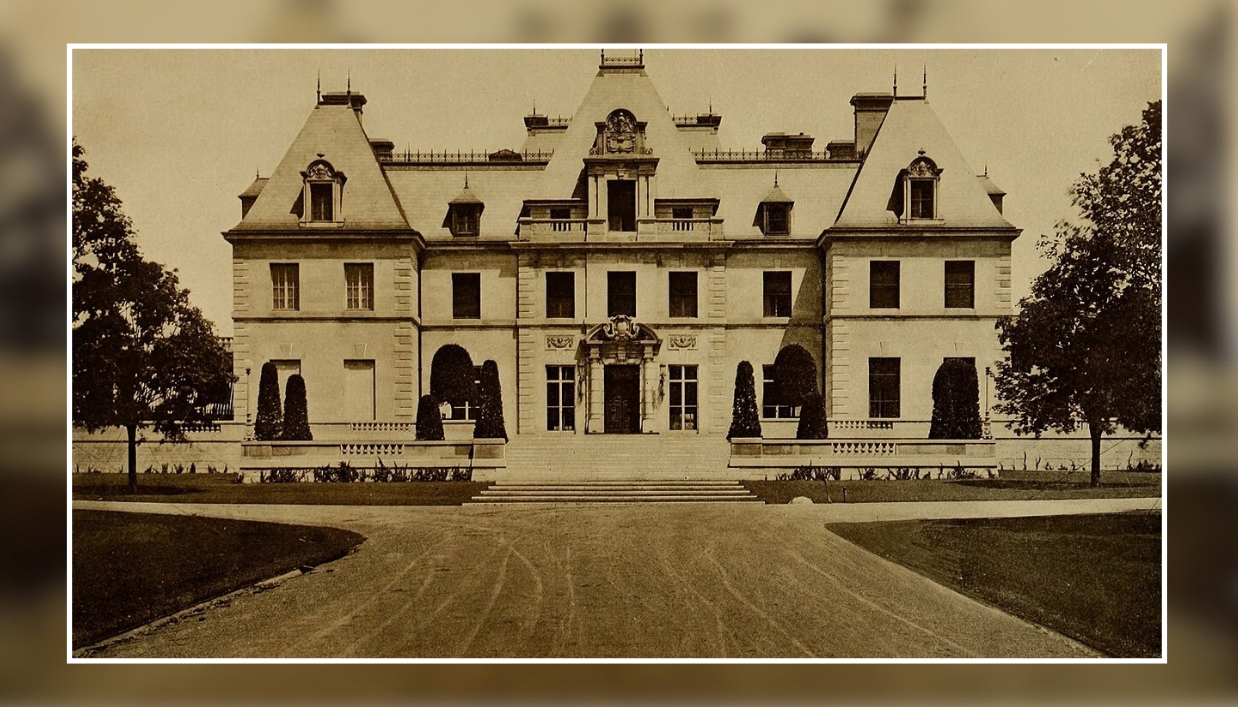
Everyone knows the Amityville Horror house. It was the scene of a real and terrible crime. On Nov. 13, 1974, Ronald DeFeo Jr. killed his parents and four siblings inside their Amityville home. The disputed supernatural claims came later, after George and Kathy Lutz moved into the house, left within weeks and told a story that became a bestselling 1977 book, a 1979 movie and an apparently inexhaustible supply of sequels.
But only a short drive away, another Long Island house developed its own sinister reputation.
Generations of locals knew it as the Massapequa Hell House, the Witch House, the Satan House or, in some versions, the Devil Worshippers House. Teenagers drove past it after dark. Parents brought their children around Halloween. Passengers watched the windows for candles that were supposedly capable of counting everyone inside the car.
Unlike the Amityville house, however, North Massapequa’s notorious home has no documented massacre, bestselling book or Hollywood franchise behind it.
It appears to have become famous largely because it looked as though something terrible should have happened there.
A castle that did not blend into North Massapequa
The private residence sits on Daniel Road in North Massapequa, where its deep red brick, pointed rooflines, turret-like projections, numerous windows and iron fencing make it difficult to confuse with the surrounding homes.
Older accounts described a maroon sidewalk that appeared to “bleed” from the house, heavy curtains covering the windows and a hearse parked in the driveway. More than one version of the story counted at least 25 front windows and suggested that the arrangement resembled a grinning face.
That was more than enough material for several generations of local teenagers.
The property has frequently been described online as a Victorian mansion. Public-record-based property profiles, however, list the house as having been built in 1954, placing it firmly in Long Island’s postwar period rather than the Victorian era.
Those same records describe a single-family home with approximately 4,072 square feet of living space on a 6,000-square-foot lot. In other words, it is a very large house occupying a relatively modest suburban parcel.
The sources reviewed do not provide a reliable timeline for when the elaborate exterior, turrets and other distinctive features were added. The 1954 date may refer to the original structure rather than everything visible today.
It is not a Victorian relic. It is more like a postwar Long Island house that declined to dress like one.
The legend had its own set of rules
As with most durable neighborhood legends, the Massapequa story came with specific details that could be repeated, tested and embellished.
The most familiar versions claimed:
- Candles would suddenly appear in an upstairs window when a car stopped outside.
- The number of candles would match the number of people inside the vehicle.
- Anyone who saw the candles was in for a stretch of bad luck.
The curtains were another important part of the story. They were not merely heavy or old-fashioned. According to the legend, they were made from material used to line coffins.
Other versions added a hearse or horse-drawn funeral carriage, purple or red lighting and residents who supposedly emerged from the house dressed entirely in black. The house’s names varied by neighborhood and generation, with Witch House, Satan House and Hell House all appearing repeatedly.
Then the rumors became considerably more ambitious:
- Satanic chanting behind closed doors
- Candlelit pentagrams
- Occult pictures inside the home
- Animal sacrifices
- Human sacrifices
- Trapdoors, cages and interior fencing
- Ground that supposedly vibrated because of something operating in the basement
No credible evidence accompanied any of these stories but that rarely slowed them down.
Long Islanders were already driving past by the 1970s and 1980s
In Facebook recollections gathered for this story, some former residents remembered hearing about the house as far back as the 1970s. Others recalled visiting during the 1980s, 1990s and early 2000s.
Several said driving past the property at night was a high school tradition. Others remembered going on bicycles, being taken by parents or bringing their own children years later.
The remembered details differ:
- Some recalled a hearse in the driveway.
- Others remembered a black carriage or an old Oldsmobile.
- Several remembered candles, dark curtains or purple lights.
- Some called it the Witch House, while others knew it only as the Satan House.
- A few said they lived nearby for years and had never heard of it.
The comments also contain a strong countercurrent. Multiple people described the residents as friendly and entirely ordinary. Some said they knew neighbors, friends or co-workers connected to the house and had never heard anything genuinely sinister about the family.
One person offered perhaps the driest architectural assessment of the property: “The original McMansion.”
Another commenter said an owner once explained that he had simply wanted a home that did not look like every other house in the neighborhood. That account has not been independently verified, but it fits the less exciting explanation found in several published retellings.
The legend was in print by at least 2003
The earliest substantial published version located for this story appeared in a Long Island Press Halloween guide originally published on Oct. 23, 2003.
By then, according to the article, high school and college students had already been driving past the property for decades. The writer described the red-brick home as fortress-like and dramatically different from everything else on its block.
Even that early account showed how unreliable the story had become. One source told the writer that the residents were completely normal. Another claimed to have seen skinned animals hanging from trees. Still another version placed a coffin and candlelit pentagram inside the home.
The article provided no evidence for the more gruesome stories. Its value is not that it proves what happened inside the house. It shows that the legend was already well established by the early 2000s.
A midnight visit added more stories in 2006
The Long Island Press returned to the house in October 2006 as part of a Friday the 13th feature.
A reporter visited around midnight and recounted stories said to have come from the fathers of friends who were volunteer firefighters. Those secondhand accounts involved funeral-style window coverings, red candles, unusual interior fencing and supposedly Satanic imagery.
The reporter also wrote that a woman inside had once yelled at teenagers standing near the property, which would not be a particularly mysterious response if the house had already become a regular destination for nighttime visitors.
Most importantly, the reporter acknowledged that the stories could be exaggerations or complete rumors. That disclaimer tends to disappear when the story is retold.
The familiar version took shape in 2014
A 2014 article helped establish the polished version of the legend that continues to circulate online.
It included nearly every familiar element:
- The Witch House and Satan House nicknames
- The maroon sidewalk
- The iron fence
- More than 25 windows
- The grinning face
- Curtains supposedly made from coffin lining
- Candles that counted passing visitors
- Residents allegedly dressed in black
- Rumors of a Satanist cult
- A counterclaim that the owners were actually a normal Christian family
- Police attention around Halloween
The article was first published by the Massapequa Observer in 2014 and was later republished elsewhere.
Another name was considerably less frightening
A 2018 Farmingdale Local History post referred to the property as Cafaro Castle, a name that sounds more like an ambitious catering venue than a gateway to the underworld.
The post repeated the major legends but stated plainly that the occult stories were not true and that a normal family lived in the house. It also described the property as the subject of decades of tall tales and teenage visits.
A Wikimedia Commons description accompanying a 2017 photograph similarly says rumors had circulated since roughly 1980, while offering the much less cinematic explanation that the owner simply wanted a red-brick house. That explanation is user-supplied rather than an official historical record, but it closely matches the accounts of several people who said they knew or met residents.
What the available records actually show
The published sources reviewed for this story do not document a murder, suspicious death, occult crime, sacrifice or other tragedy associated with the North Massapequa house. They also do not provide verified evidence of paranormal activity.
What they do show is remarkably consistent:
- The house is architecturally unusual.
- Local teenagers had been driving past it for decades by 2003.
- Stories about candles, curtains, black clothing and occult activity circulated largely through friends, relatives and neighbors.
- Published writers repeatedly warned that the claims were rumors.
- Other residents described the family as normal and pleasant.
- The most lurid details became more elaborate as the legend spread.
The property records are considerably less exciting. They describe a large single-family house built in 1954. There is no entry for passenger-counting candles.
Why the Massapequa Hell House became a legend
The house’s appearance provides the most obvious answer.
Long Island’s postwar neighborhoods were built around a relatively familiar menu of capes, ranches, colonials and split-levels. Place an enormous red-brick castle-like home among them, cover the windows, add an iron fence and park an old hearse outside, and the neighborhood will eventually develop a theory.
The nearby Amityville story may also have provided a ready-made cultural template. By the late 1970s, Long Island was already internationally associated with a house said to contain something evil. A few miles away, local teenagers had another unusual home they could visit without buying a movie ticket.
No source reviewed for this story establishes that Amityville directly inspired the Massapequa legend. The comparison is an inference, but it is not difficult to see why the two became linked.
A private home that became public folklore
The Massapequa Hell House remains a private residence, not a haunted attraction or historical site. For that reason, this story is not publishing its street number or encouraging readers to visit.
The long history of drive-bys is part of the folklore, but it also meant that real residents had strangers stopping outside their home, particularly around Halloween. Older accounts said police patrols became common during the season, although that claim has not been independently confirmed through police records. That may be the only genuinely disturbing part of the story.
A family chose to live in an unconventional house. The neighborhood decided that unconventional required an explanation. Over time, the explanation grew to include candles, coffins, witches, cults and bad luck.
Sometimes a house does not need to be haunted to become a haunted house.
Sources
- Long Island Press, Long Island’s Haunted Halloween Guide, originally published Oct. 23, 2003.
- Long Island Press, Witching Hour, published Oct. 26, 2006.
- Jennifer Fauci’s 2014 Massapequa Observer article, later republished by Horror Revival.
- Farmingdale Local History, Massapequa “Haunted” House, published May 8, 2018.
- LI Living, The Legend of Hell House, published Oct. 12, 2022.
- Public-record-based property information from Zillow, Realtor.com, PropertyShark and Redfin.
- Newsday and History coverage of the DeFeo murders and Amityville Horror story.