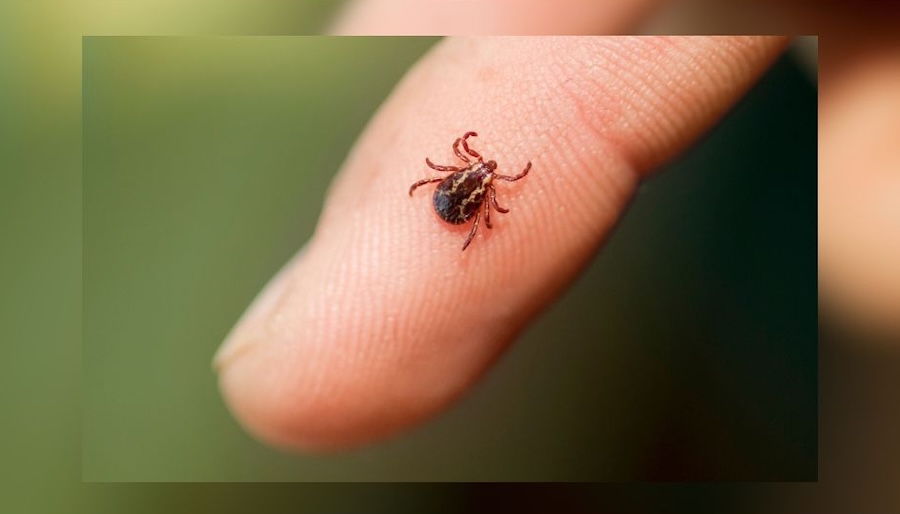
How long are ticks active on Long Island? The answer may surprise anyone who assumes tick season ends with summer. Suffolk County says ticks can remain active year-round whenever temperatures are above 40 degrees, and fall is an especially important time for adult blacklegged ticks, also known as deer ticks.
The calendar may say fall, but on Long Island, putting away the beach chairs does not mean it is time to put away the tick repellent.
In fact, autumn is an important part of tick season, particularly for adult blacklegged ticks, commonly known as deer ticks. And depending on the weather, Long Islanders can encounter ticks well into winter.
Suffolk County puts it rather simply: ticks can remain active year-round when temperatures are above 40 degrees.
So there really is no date on the Long Island calendar when tick season simply ends.
Fall brings another period of deer tick activity
The tick most closely associated with Lyme disease has different periods of activity depending on its stage of life.
According to the New York State Department of Health:
• Deer tick nymphs are most active from about mid-May through mid-August.
• Adult deer ticks are most active from March through mid-May and again from mid-August through November.
That second period is the one worth remembering as Long Island heads into fall.
Adult deer ticks emerge in the fall, with New York State describing October and November as their peak period. So while the tiny nymphs that cause much of the concern during spring and summer become less active, larger adult ticks are becoming more active.
Summer ending, in other words, does not mean deer tick activity is ending with it.
What about winter?
Even winter is not necessarily a complete break from ticks.
Suffolk County advises residents that ticks can remain active year-round whenever temperatures are above 40 degrees and recommends preventive measures whenever exposure is likely.
New York State and the Centers for Disease Control and Prevention go even further in describing blacklegged tick behavior, noting that ticks can become active on warmer winter days when temperatures are above freezing.
That matters on Long Island, where winter frequently includes milder days mixed in with stretches of colder weather.
A warm December or February afternoon is not automatically a tick-free one.
Fall yardwork can put you in tick habitat
Ticks do not fly, jump or drop out of trees.
Instead, Suffolk County says they crawl close to the ground on leaves, brush and tall grass, waiting for an animal or person to pass close enough for them to climb aboard.
That makes some very ordinary fall activities potential opportunities for tick exposure:
• Raking and moving leaves
• Clearing brush or working around the edges of a yard
• Hiking or walking through wooded and grassy areas
And exposure does not require a trip deep into the woods. The CDC notes that many people who develop Lyme disease encounter infected ticks around their own yards or neighborhoods.
Suffolk County recommends keeping grass mowed, trimming bushes and removing leaf litter and other yard debris to reduce tick habitat around homes.
Deer ticks can carry more than Lyme disease
The blacklegged tick is best known on Long Island for transmitting the bacteria that cause Lyme disease, but that is not the only concern.
Blacklegged ticks can also transmit pathogens responsible for illnesses including babesiosis, anaplasmosis, hard tick relapsing fever caused by Borrelia miyamotoi and Powassan virus disease.
Not every tick is infected, and not every tick bite results in illness. Still, prevention and prompt tick checks remain important throughout the months when ticks are active.
New York health officials say that, in general, a deer tick must remain attached for roughly 36 to 48 hours or more to transmit the bacteria that cause Lyme disease.
The fall routine that shouldn’t disappear
Suffolk County recommends continuing the same basic precautions used during the warmer months.
Check yourself for ticks after spending time in likely tick habitat, check children and pets, use tick repellent as directed and stay near the center of trails when hiking.
The county also recommends putting clothes in a dryer on the highest temperature setting for 10 minutes after returning home to kill ticks that may be hiding in clothing.
And do not assume that the first frost means the problem is gone.
The simplest answer to the question “How long is tick season on Long Island?” may be this:
It can last all year.
Fall is still an active period, adult deer ticks can remain active into winter, and a stretch of mild weather can bring ticks out again even after temperatures have fallen.
On Long Island, the end of summer is not the end of tick checks.
Sources:
- https://www.suffolkcountyny.gov/Departments/Health-Services/Public-Health/Preventive-Services/Arthropod-borne-Diseases/Ticks
- https://www.health.ny.gov/publications/2825/
- https://www.health.ny.gov/diseases/communicable/lyme/fact_sheet.htm
- https://www.cdc.gov/ticks/data-research/facts-stats/blacklegged-tick-surveillance.html
- https://www.cdc.gov/lyme/prevention/