
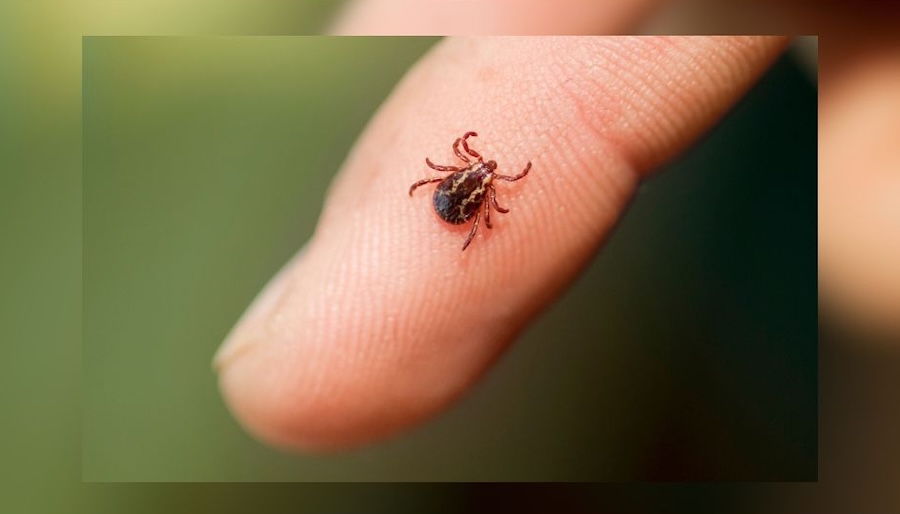
Ticks on Long Island are best known for spreading Lyme disease, but Suffolk County’s unusually active tick season is drawing attention to a much rarer illness.
Four cases of tularemia, commonly called rabbit fever, have been reported in Suffolk County during 2026. The bacterial disease can cause a high fever, swollen lymph nodes and an ulcer where an infected tick bites.
Did you think the snowy winter would kill ticks? Think again. Read our article explaining why!
A 9-year-old Riverhead boy remains fatigued months after a tick was removed from his head. Other local patients include people who work in landscaping, while a Riverhead woman is recovering after being bitten by an infected outdoor cat.
The cases involve different forms of exposure, but ticks remain central to the disease’s natural cycle. Ticks can pick up tularemia bacteria while feeding on infected rabbits, rodents and other wildlife. They can then transmit the bacteria to people or animals.
A tick bite left a Riverhead boy sick for weeks
One of the first publicly identified patients was 9-year-old John Detmer of Riverhead.
His mother removed a tick from his head on April 23. He later developed a large lesion at the bite site, swollen lymph nodes in his neck, leg pain and a fever that lasted approximately 11 days.
His family was told May 20 that he had tested positive for tularemia.
The boy underwent two rounds of antibiotics. More than two months later, his mother said he continued to have low energy and limited stamina.
Doctors told the family that it could take time for him to recover fully.
Another probable case involved a Ridge resident who reportedly found a tick attached to him after spending time at his home in May. He later experienced lingering health problems that reportedly included migraines, insomnia and shortness of breath.
Formal confirmation of tularemia can take several weeks because laboratory results must sometimes be considered alongside a patient’s symptoms and possible exposure.
Tularemia can look very different from Lyme disease
Tularemia is much rarer than Lyme disease, but patients can become seriously ill.
The form most commonly associated with tick bites is called ulceroglandular tularemia. Symptoms can include:
- A sudden high fever
- A painful ulcer or open sore at the bite site
- Swollen lymph nodes near the affected area
Patients may also experience chills, headaches, fatigue, muscle aches, weakness, vomiting or abdominal discomfort.
Unlike Lyme disease, which may produce a bull’s-eye rash, tularemia often causes a distinct sore or ulcer where the bacteria entered the body.
Dr. Sharon Nachman, chief of pediatric infectious diseases at Stony Brook Children’s Hospital, told The Suffolk Times that tularemia patients are often quite sick by the time they seek emergency treatment.
The disease can become life-threatening if it is not treated, particularly when it spreads through the body or affects the lungs. It is generally treatable with appropriate antibiotics.
Tularemia is not known to spread from one person to another.
Lone star and American dog ticks can carry it
Several kinds of ticks live on Long Island, but the lone star tick and American dog tick are among the species capable of transmitting tularemia.
The process begins with wildlife. A tick feeds on an infected rabbit, hare, rodent or other small mammal and acquires the bacteria. The infected tick can later bite a person, cat or another animal.
Ticks do not hatch carrying every disease they are capable of transmitting. They generally become infected by feeding on an animal that already carries the bacteria.
That means not every tick is infected, and not every tick bite causes disease. Still, health officials recommend watching for symptoms after a bite and telling a medical provider about any recent tick exposure.
An outdoor cat transmitted another infection
The latest publicly described Suffolk patient was not bitten directly by a tick.
A Riverhead woman was bitten on the finger by her outdoor cat while attempting to give the animal medication. The woman, described as a senior citizen, went to Peconic Bay Medical Center with a badly infected-looking finger.
Doctors initially treated her for an ordinary cat bite and sent her home. She was called back after blood cultures tested positive for the bacterium that causes tularemia.
The woman was receiving treatment and improving, according to Dr. Michael Huang, chief of infectious diseases at Peconic Bay Medical Center.
The cat died from the disease.
Cats can become infected when they are bitten by an infected tick or when they hunt, bite or handle an infected rabbit, rodent or other small animal. An infected cat can then expose a person through a bite or scratch.
The Suffolk County Department of Health Services confirmed that four cases had been reported during 2026 but did not say whether the woman was included in that official count.
Landscapers may also be exposed
Huang said he had treated two other tularemia patients this year, both of whom worked in landscaping.
Ticks can bite landscapers and other outdoor workers as they move through grass, brush and leaf litter. However, tularemia can also spread when equipment disturbs an infected animal or carcass.
A mower, brush cutter or similar machine can send contaminated particles into the air. A person can become infected after inhaling the material.
People can also contract tularemia through:
- Bites from infected ticks or deer flies
- Direct contact with an infected animal
- A bite or scratch from an infected cat
- Drinking contaminated water
- Inhaling contaminated agricultural or landscaping dust
The variety of transmission routes is one reason tularemia may not immediately be recognized as a tick-related illness.
Why it is called rabbit fever
Tularemia is commonly called rabbit fever because rabbits and hares are especially susceptible to the bacteria.
A sick rabbit may appear lethargic, move slowly or fail to flee when approached. Residents should not handle a sick or dead rabbit, rodent or other wild animal with bare hands.
Anyone who must move an animal should wear gloves, long sleeves, long pants, socks and closed shoes. A mask may also reduce the risk of breathing contaminated particles.
Residents should also avoid mowing over an animal carcass.
Rabbits do not pass tularemia casually to people simply by being present in a yard. The risk comes from direct contact, infected ticks or other forms of exposure to the bacteria.
Suffolk has reported cases repeatedly
Tularemia remains rare, but it has appeared regularly in Suffolk County.
State health data showed:
- Four Suffolk County cases in 2024
- Three cases in 2023
- One case in 2022
Nassau County recorded one case in 2023 and had reported none during 2026 as of early August. Complete county data for 2025 were not yet available.
Approximately 150 to 200 cases have been reported annually across the United States in recent years.
A study published by the Centers for Disease Control and Prevention examined 30 New York tularemia cases reported between 1993 and 2023. Researchers found that 13 of them involved Suffolk County residents.
Half of all the New York cases included in the study occurred on Long Island.
Researchers also detected the tularemia bacterium in a pool of lone star tick nymphs collected in Southampton Town. Only one tested pool was positive, suggesting that infected ticks were uncommon but present.
Ticks started biting earlier this year
The Suffolk cases have emerged during an unusually early and active season for ticks.
In April, tick bites accounted for 183 of every 100,000 emergency room visits in the Northeast. That was up from 131 during April 2025 and marked the highest April rate in nearly a decade.
The elevated activity continued into June, with ticks beginning to bite several weeks earlier than usual in some areas.
Local experts have suggested that last winter’s persistent snow cover may have protected ticks by insulating them from cold and dry conditions.
Warmer winters, abundant deer and rodent populations, habitat changes and development near wooded areas have also contributed to the spread of ticks and tick-borne diseases.
Ticks do not fly or travel far on their own. They are transported by the animals they feed on, including deer, mice, rabbits, birds and household pets.
How to avoid tick bites
Health officials recommend taking precautions whenever spending time in wooded, grassy or brush-filled areas.
- Use an EPA-registered insect repellent.
- Treat clothing, boots and outdoor equipment with products containing 0.5% permethrin, following the label instructions.
- Avoid tall grass, brush and heavy leaf litter when possible.
- Walk near the center of trails.
- Check clothing, children, pets and gear after returning indoors.
- Shower within two hours of outdoor activity.
- Conduct a full-body tick check.
- Remove attached ticks promptly with fine-tipped tweezers.
- Do not handle sick or dead wildlife without protective equipment.
- Avoid mowing over dead animals.
Anyone who develops a high fever, swollen lymph nodes or an ulcer after a tick bite should contact a medical provider.
Patients should specifically mention the tick bite, even if it happened several weeks earlier. Tularemia is rare enough that the exposure history may help doctors identify it more quickly.


