There are a few things Long Islanders will argue about without hesitation. Pizza. Traffic. Property lines. But bagels? That’s not even a debate.
Long Island bagels are better. Not “arguably.” Not “in some cases.” Just better. And if you’ve ever stood in line at your local bagel shop on a Sunday morning, you already know this isn’t just food. It’s routine. It’s ritual.
Click here for more stories about Long Island’s food and restaurant history.
Ask around and you’ll get the same answer almost every time. What’s the go-to weekend breakfast? A bagel. Maybe with cream cheese, maybe with eggs, maybe with both. But it’s happening.
So what actually makes Long Island bagels different? The answer isn’t as simple as people think.
Where the Bagel Actually Comes From
Before Long Island made the bagel its own, it had a long journey to get here.
- Versions of bagels have existed in Europe since at least the 1600s, possibly even earlier
- The modern bagel came from Eastern European Jewish communities
- It was originally called a “beigel” in Yiddish
- Immigrants brought it to New York City in the 19th century
- By the early 1900s, it had been Americanized into what we now call the bagel
From there, it spread outward. And after World War II, as Long Island suburbs expanded, so did bagel culture.
That’s when it stopped being just a food… and started becoming a way of life.
It’s Not the Water (Seriously)
This might be the biggest Long Island myth of all time.
You’ve probably heard it: “It’s the water.”
There’s some logic behind it:
- New York’s water is considered “soft,” meaning it has lower levels of calcium and magnesium
- Some believe this affects dough texture and flavor
- Bagel shops in places like Florida have even tried importing New York water or recreating it
But here’s the twist.
- Science says water quality has very little impact on what makes a great bagel
So while it makes for a great story, the water isn’t the magic ingredient.
Something else is.
The Real Secret: How They’re Made
The difference comes down to process. And on Long Island, that process hasn’t been rushed.
- Dough is shaped by hand, not mass-produced by machines
- It’s left to rest in a refrigerator, slowing down the yeast
- That extra time allows the flavor to develop more deeply
Then comes the part that really matters.
Boiling Is Everything
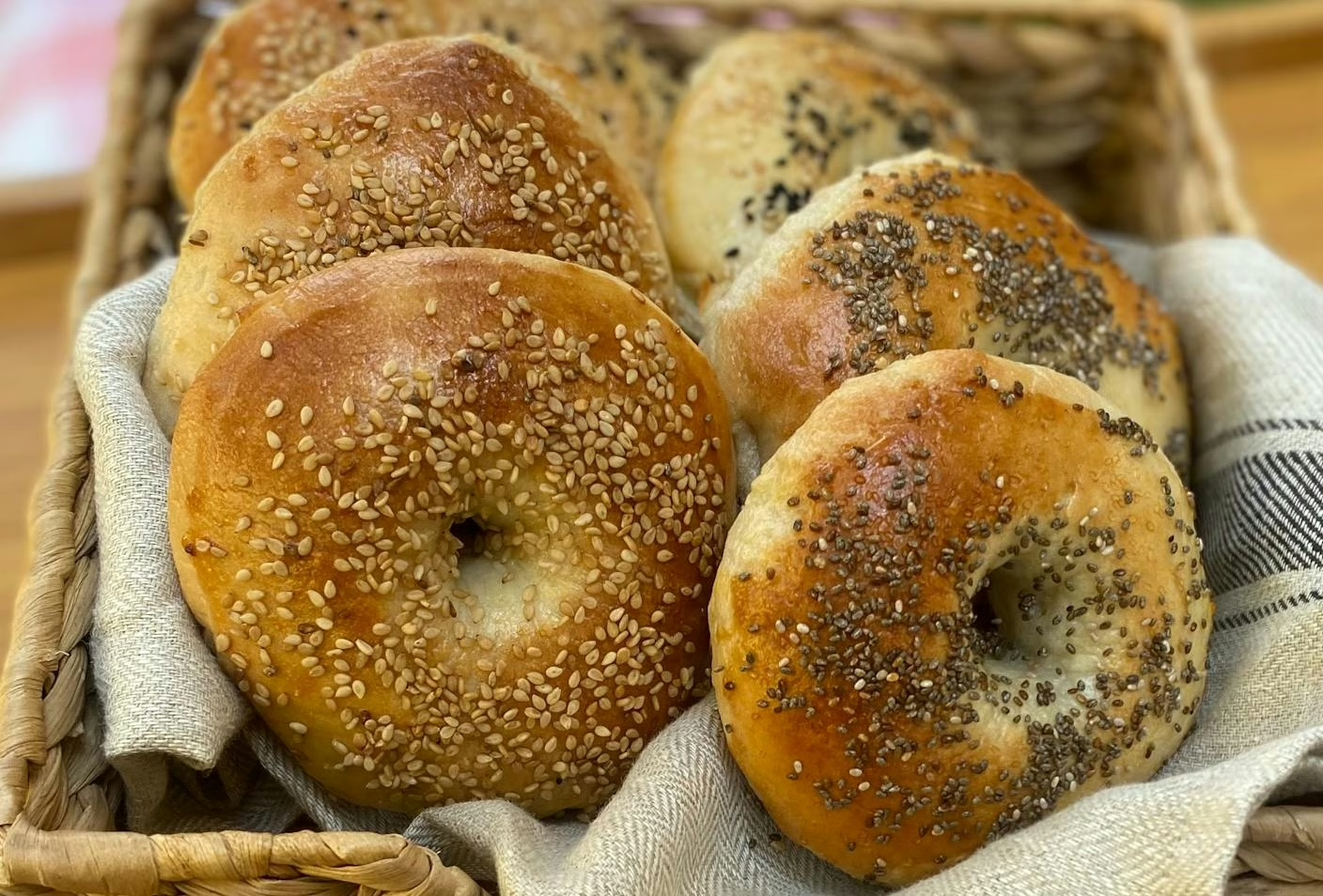
Real bagels are boiled before they’re baked. And that step changes everything.
- Boiling sets the outer layer of the dough
- It locks moisture inside
- It creates that signature chewy texture
- It gives bagels their glossy, slightly crisp crust
According to culinary experts like Chef Richard Coppedge of the Culinary Institute of America, this step is what separates a real bagel from everything else.
After boiling, they go into a hot oven to finish.
This is the same method brought over by immigrants generations ago. And it’s still the standard at Long Island bagel shops today.
The Shortcut That Ruins Everything
Not every bagel is made this way.
- Many large-scale or out-of-state shops skip boiling
- Instead, they steam the bagels in the oven
It’s faster. It’s easier. And it produces something that looks like a bagel.
But the result?
- Softer texture
- Less chew
- Less flavor
In other words, not even close.
That’s why mass-produced bagels never hit the same as the ones from your neighborhood spot.
Why It Still Matters on Long Island
Long Island didn’t just adopt the bagel. It preserved the way it was meant to be made.
From early-morning lines to weekend routines, bagels are part of daily life here in a way that’s hard to explain to anyone who didn’t grow up with it.
And whether it’s the process, the history, or just decades of doing it right, one thing is clear.
You can try to copy it. You can even import the water.
But you’re still not getting a Long Island bagel.
Photo: Photo by Ranya Obeidallah