Most people using the Setauket–Port Jefferson Station Greenway have no idea they’re passing one of Long Island’s best-known environmental cleanup sites: Lawrence Aviation.
The paved greenway runs along the former rail corridor bordering the Lawrence Aviation property in Port Jefferson Station. Every day, cyclists, runners, dog walkers, and families travel past the site, often unaware that behind the trees sits a property that has spent decades at the center of environmental investigations, cleanup efforts, redevelopment battles, and debates about the future of Long Island transportation.
The story begins long before Lawrence Aviation ever existed.
Before the Factories at Lawrence Aviation, There Were Turkeys
The 126-acre property was originally part of a turkey farm owned by Ledkote Products Company of New York.
In 1959, the site became home to Lawrence Aviation Industries, which manufactured products made from titanium sheet metal for the aeronautics industry. The company also produced titanium golf club components and other specialized products. Some accounts have connected its work to military aircraft, including parts associated with the Grumman F-14 fighter jet.
For decades, the facility operated in Port Jefferson Station.
What happened on the property during those years would eventually make it one of the most closely watched environmental sites on Long Island.
The Decision That Changed Everything
One of the most remarkable details in the site’s history occurred during what was reportedly intended to be a cleanup effort.
According to EPA records, Lawrence Aviation crushed more than 1,600 drums in 1980.
Instead of removing hazardous materials from the property, the process allowed liquid contents from the drums to spill directly onto unprotected soil.
Over the years, disposal practices at the facility released contaminants that included:
- Trichloroethene (TCE)
- Tetrachloroethene (PCE)
- Acid wastes
- Bases
- Oils
- Sludge
- Heavy metals
- Other industrial wastes
The contamination would eventually spread beyond the property itself and into the surrounding environment.
When Groundwater Became the Problem at Lawrence Aviation
During investigations in the 1970s and 1980s, Suffolk County and New York State inspectors documented contamination at and around the facility.
Samples taken from runoff areas, cesspools, puddles, and waste-handling locations contained elevated levels of contaminants including fluoride, toluene, carbon tetrachloride, and heavy metals.
Nearby residential wells were also found to contain contaminants including fluoride, nitrates, TCE, PCE, 1,2-dichloroethene, and heavy metals.
In 1987, the EPA began supplying bottled water to residents whose wells exceeded federal drinking water standards. Impacted homes were later connected to public water supplies.
At one point, contamination from the site was tracked roughly a mile and a half north toward Port Jefferson Harbor. That migration ultimately led to the installation of a second groundwater treatment system near Old Mill Pond to help intercept contaminated groundwater before it could continue moving toward Old Mill Creek and the harbor.
For Long Islanders, this wasn’t simply an industrial pollution story. It was a groundwater story, and groundwater is where the region gets its drinking water.
A Major Long Island Cleanup Effort
The EPA placed Lawrence Aviation on the National Priorities List as a Superfund site in February 2000.
The property included:
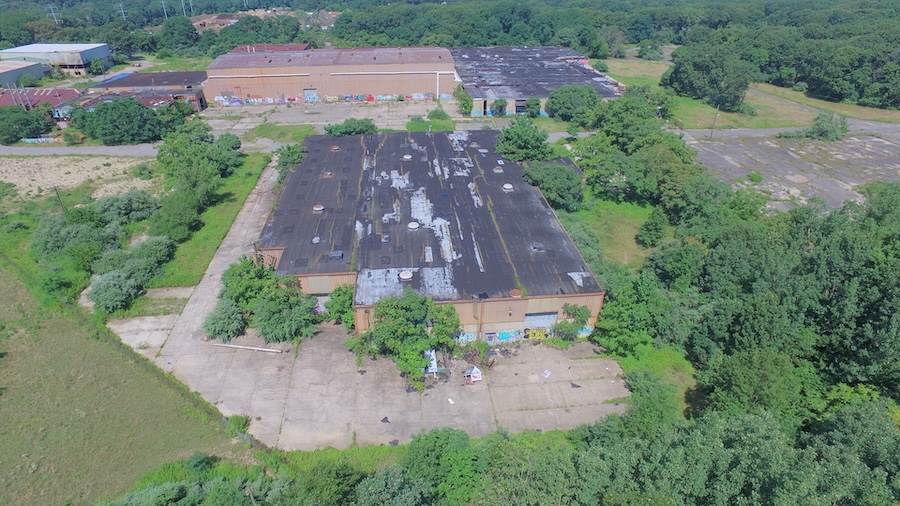
- Former manufacturing buildings
- An abandoned waste lagoon
- A drum-crushing area
- Roughly 80 acres of wooded land
- A contaminated groundwater plume extending beyond the property
The cleanup effort that followed lasted decades.
Among the actions taken:
- More than 3,300 drums of hazardous materials were removed from the site
- Approximately 17,000 tons of PCB- and lead-contaminated soil were excavated and removed
- Contaminated transformers containing PCB liquids were removed
- Asbestos, mercury, and other hazardous materials were safely disposed of
- Two groundwater extraction and treatment facilities were installed
One groundwater treatment system was built at the Lawrence Aviation property itself.
A second was installed near Old Mill Pond to help prevent contaminated groundwater from reaching Old Mill Pond, Old Mill Creek, and Port Jefferson Harbor.
The cleanup stretched across decades and became one of the most extensive environmental remediation projects in Suffolk County.
The Owner of Lawrence Aviation Went to Prison
The legal consequences eventually reached the company’s longtime owner, Gerald Cohen.
In 2008, Lawrence Aviation and Cohen pleaded guilty to violating federal hazardous waste laws by storing hazardous waste without the required permits.
Cohen was sentenced to one year and one day in prison. He and the company were also ordered to pay restitution.
The legal troubles continued.
In 2019, a federal court ordered Lawrence Aviation and Cohen to pay more than $48 million in cleanup costs and penalties related to contamination at the site.
The judgment marked a major chapter in the long-running Lawrence Aviation cleanup effort and reinforced the principle that those responsible for contamination can be held financially accountable for cleanup costs.
The Lawrence Aviation Buildings Finally Came Down
For years, abandoned industrial buildings remained standing on the property as a visible reminder of its past.
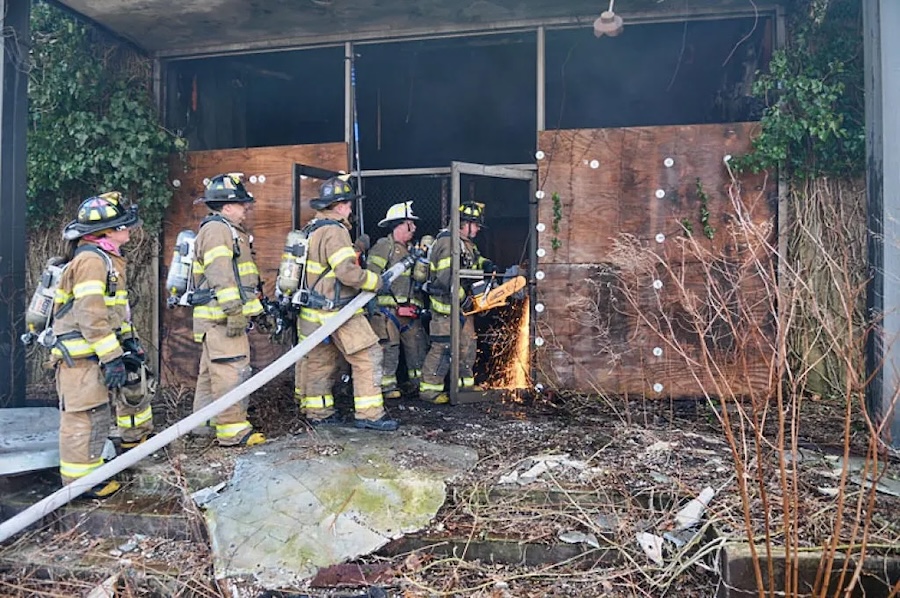
The abandoned buildings also attracted unwanted attention over the years. The property was the scene of multiple fires after the facility closed, including an arson fire that injured two firefighters. Vacant structures on the site were also targeted by trespassers and burglars, adding to concerns about the long-term future of the property while cleanup efforts continued.
In 2024, New York State completed demolition of the former manufacturing complex, removing abandoned structures, machinery, asbestos-containing materials, contaminated liquids, and other industrial remnants.
The demolition project recycled approximately 2,500 tons of steel and removed thousands of tons of debris.
For the first time in decades, the property looked less like an abandoned factory and more like a site awaiting its next chapter.
An Unsettling Discovery at the Lawrence Aviation Site
In December 2023, Suffolk County Police investigated the discovery of an unidentified woman’s body at the former Lawrence Aviation property on Sheep Pasture Road. The remains were found by a passerby and transported to the Suffolk County Medical Examiner’s Office as detectives worked to determine the woman’s identity and cause of death.
The site had appeared in criminal investigations before. In 2023, authorities charged two men in connection with the 2021 stabbing death of a man whose body was found on the nearby Greenway Trail adjacent to the Lawrence Aviation property.
While those incidents were unrelated to the environmental contamination that made Lawrence Aviation famous, they added another chapter to the long and often unusual history of a property that has remained largely vacant for decades.
A Site That Almost Changed the LIRR
The Lawrence Aviation story took another unexpected turn when transportation planners began looking at the property as part of the future of the Long Island Rail Road.
For years, officials discussed using part of the site as a rail yard to support a future electrification of the Port Jefferson Branch east of Huntington.
The idea attracted attention because the property sits adjacent to the rail corridor and is one of the few large undeveloped parcels in the area.
In 2023, the Suffolk County Landbank Corporation entered into an agreement to sell 40 acres of the property to the MTA for $10.
The proposed rail yard was viewed as a potential piece of a future Port Jefferson Branch modernization effort.
The plan encountered delays involving state-owned right-of-way, the adjacent greenway corridor, and other logistical challenges.
Then came another twist.
In June 2026, the MTA announced it would not move forward with the planned acquisition.
Once again, the future of the property was left unresolved.
Not Quite Finished
Today, Lawrence Aviation occupies a unique place in Long Island history.
Part of the site has been removed from the EPA’s National Priorities List after cleanup goals were achieved.
But the story is not over.
Groundwater treatment systems remain in operation.
- Monitoring continues.
- EPA reviews continue every five years to ensure cleanup measures remain protective of public health and the environment.
- Redevelopment discussions also continue.
Over the years, ideas for the property have included:
- Solar energy facilities
- Rail infrastructure
- Industrial redevelopment
- Open space preservation
Residential development has generally not been considered appropriate because of the property’s history and cleanup restrictions.
The Property Behind the Trail
For many Long Islanders, Lawrence Aviation remains hidden in plain sight.
You can walk or bike the Setauket–Port Jefferson Station Greenway and pass the edge of the property without realizing the history hidden behind the trees.
You can ride the train through the area.
You can drive nearby and never realize that this single property helped shape discussions about groundwater protection, environmental cleanup, redevelopment, and even the future of rail transportation in Suffolk County.
What began as a turkey farm became an aerospace manufacturer.
What became an aerospace manufacturer became a Superfund site.
And decades later, the future of the property remains one of the most fascinating unanswered questions on Long Island.
Photo: Suffolk County Landbank Corporation study/Nelson Pope Voorhis