Look up, Long Island! The Perseids aren’t finished with us yet.
Clouds, rain and generally lousy timing spoiled much of the show for Long Islanders hoping to catch the peak of the Perseid meteor shower Wednesday night into early Thursday morning. But there’s some good news from the heavens and the weather forecast: Thursday night into early Friday morning offers another chance.
The Perseids officially peaked overnight Aug. 12 into Aug. 13, when under perfect conditions observers could potentially see 50 to 100 meteors per hour. But the shower doesn’t simply switch off after its peak. NASA says good viewing is possible on the nights immediately before and after the maximum, while the American Meteor Society lists the Perseids as active through Aug. 24.
And this time, Long Island’s weather may cooperate a little more.
The National Weather Service is forecasting partly cloudy skies Thursday night across much of Long Island, including Islip and Riverhead, with overnight temperatures around 68 degrees. That doesn’t guarantee a perfectly clear sky, but it’s a considerable improvement for meteor watching compared with the clouds and rain that interfered with the official peak.
So, is it still worth going outside?
Yes, although expectations should be dialed back from what was possible during the peak.
EarthSky notes that the morning of Aug. 14 could still provide good Perseid viewing, although meteor activity tends to fall quickly after the shower reaches maximum. NASA similarly says the nights surrounding the peak can provide good viewing.
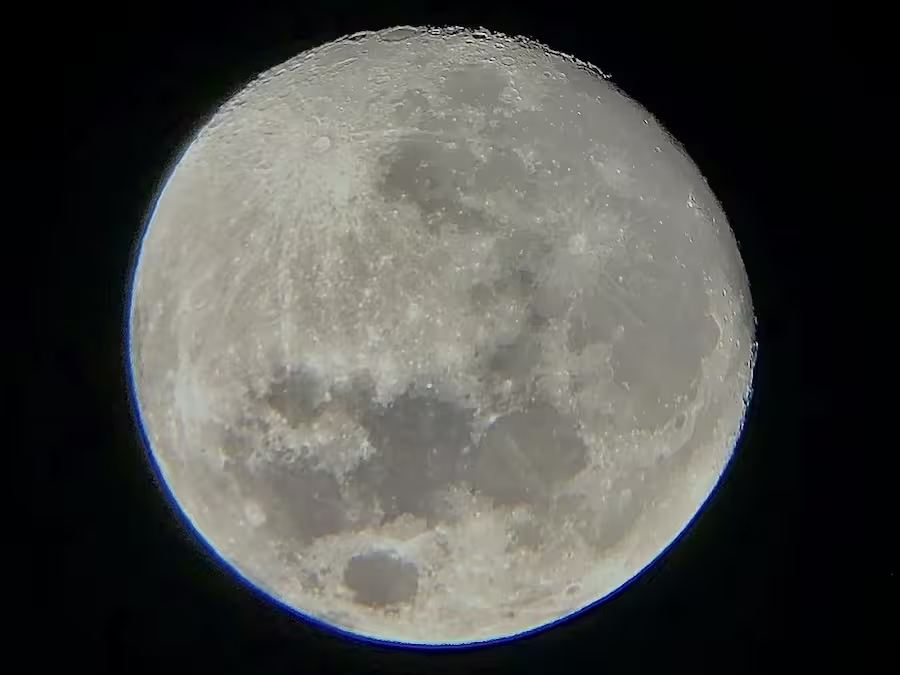
There’s another big advantage this year: the Moon.
The 2026 Perseid peak coincided with the Aug. 12 new moon, leaving the sky almost completely free of moonlight. That favorable setup continues into Thursday night, giving observers a much darker backdrop for catching fainter meteors than they get during many Perseid years.
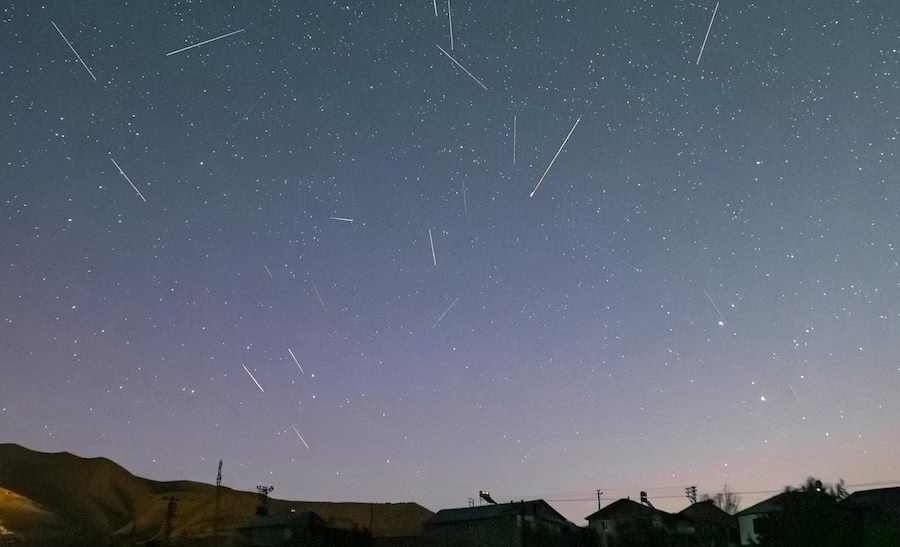
The Perseids are also known for producing particularly bright meteors and occasional fireballs, so even if the overall rate has dropped, there’s still a chance for a few memorable streaks across the Long Island sky. NASA calls the Perseids one of the year’s best showers because of their fast, bright meteors and long trails of light.
When should Long Islanders look?
Your best bet is after midnight Thursday night and into the predawn hours Friday, Aug. 14.
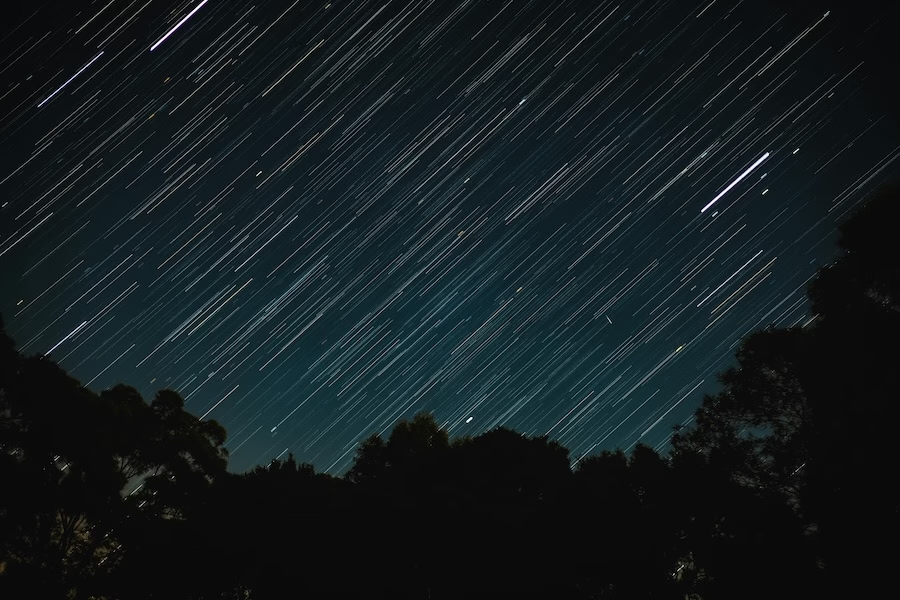
NASA says Perseids are generally best during the predawn hours, although meteors can begin appearing as early as around 10 p.m. The radiant, the point from which the meteors appear to originate, is in the constellation Perseus toward the northeast. But there’s no need to stare at Perseus. Meteors can streak through almost any part of the sky.
For the best chance, get as far away from streetlights, parking lots and other artificial light as practical. Give your eyes roughly 20 to 30 minutes to adjust to the darkness and resist checking your phone every few minutes. A reclining chair or blanket works better than binoculars or a telescope because meteor watching is all about seeing as much of the sky as possible.
Long Island obviously can’t compete with a remote mountaintop for truly dark skies, but heading toward darker sections of the East End or finding an open area away from major commercial districts can improve the odds.
SciFiSland has been following the Perseids for years. The annual shower happens as Earth passes through a stream of debris left behind by Comet 109P/Swift-Tuttle. Tiny bits of that material slam into Earth’s atmosphere at roughly 37 miles per second, producing the familiar flashes we call shooting stars.
So if you looked outside Wednesday night and saw mostly clouds, don’t pack away the lawn chair just yet.
The biggest Perseid show of 2026 may have happened behind Long Island’s cloud cover, but Thursday night gives us something astronomers rarely get from the weather: a do-over.