The hamlet of Kings Park has an unusual connection to the sprawling psychiatric hospital that once dominated its waterfront: the community took its modern name from the institution, not the other way around.
Kings Park Psychiatric Center operated on Long Island’s North Shore from 1885 until 1996. During those 111 years, it grew from a farm colony created to ease overcrowding in Brooklyn into a nearly self-contained community with thousands of patients, its own railroad spur and more than 150 buildings.
Today, much of the former campus is part of Nissequogue River State Park, but the remaining hospital buildings, especially the enormous Building 93, are still among the most recognizable remnants of Long Island’s institutional past.
What was Kings Park Psychiatric Center?
The institution opened in 1885 as the Kings County Farm and Asylum, a satellite facility established by Brooklyn’s Kings County government to relieve overcrowding at the Kings County Lunatic Asylum in Flatbush.
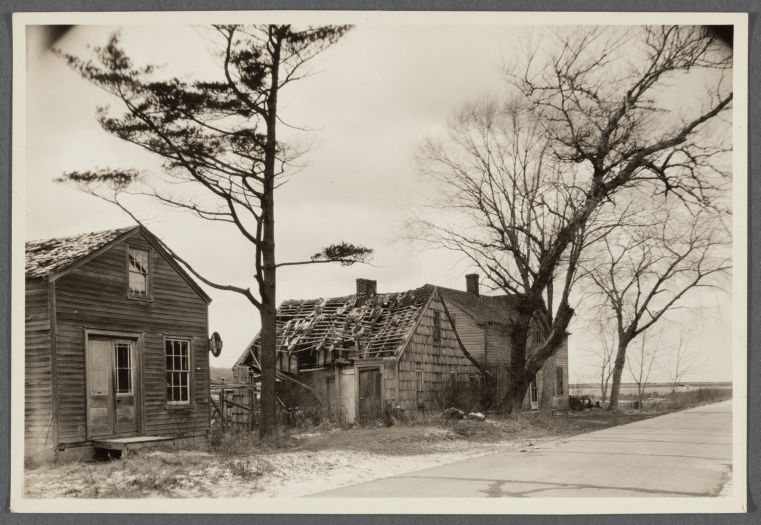
The hospital was established on a large tract overlooking Long Island Sound in an area then known as Indian Head.
Its original approach reflected a psychiatric treatment philosophy common at the time. Rather than confining everyone inside one enormous hospital building, patients lived in smaller cottages and worked outdoors.
Farming was considered part of the treatment.
Patients cultivated crops, tended livestock and performed other work around the grounds. The theory was that fresh air, physical activity and productive work could have a therapeutic benefit while also helping the institution become more self-sufficient.
By 1892, the growing campus included cottages along with a power station, icehouse, laundry, warehouses, dining halls and a dairy farm.
Kings Park was named after the hospital
Here is one of the stranger pieces of local history: Kings Park Psychiatric Center did not take its name from the hamlet of Kings Park. The hospital helped give the community its name.
The surrounding area had been known as Indian Head when the institution opened.
New York State assumed control of the hospital in 1895. The facility became the Long Island State Hospital at Kings Park, then Kings Park State Hospital in 1904. The name Kings Park became attached to the surrounding community as well.
The institution would not officially become known as Kings Park Psychiatric Center until 1974.
So the next time someone asks how Kings Park got its name, the answer leads directly back to a psychiatric hospital created by Brooklyn officials in the 19th century.
Kings Park became a city within a hospital
What began as a farm colony grew dramatically as the patient population increased.
By the 1930s, the campus had expanded into what amounted to a small city. Over its history, the hospital grounds contained more than 150 buildings serving a wide variety of purposes.
Among the facilities associated with Kings Park were:
- Farmland and livestock facilities
- A cow barn and piggery
- A butcher shop
- A tailor shop
- A morgue
- A power plant
- Maintenance buildings
- Nurses’ residences
- A railroad spur
- Two marinas
The railroad connection was particularly important for moving people and supplies around such a large institution. Part of that former railroad corridor survives today as the Kings Park Hike and Bike Trail through Nissequogue River State Park.
The hospital also became a major local employer. Thousands of staff members worked there over the decades, and many lived in or around Kings Park.
How many patients lived at Kings Park Psychiatric Center?
The numbers eventually became enormous.
By 1900, the institution was already home to thousands of patients and hundreds of employees.
The population continued increasing through the first half of the 20th century, reaching its peak in 1954, when the patient census topped 9,300.
That meant thousands of people were living, working, eating and receiving treatment on a campus that functioned largely as a community unto itself.
That growth also helps explain why Kings Park required so many specialized buildings and why one particularly enormous structure came to dominate the campus.
What is Building 93 at Kings Park Psychiatric Center?
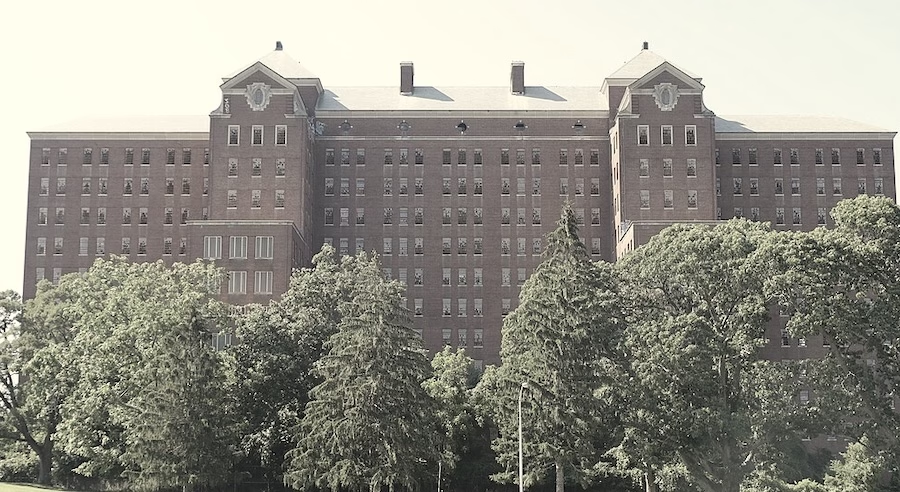
Building 93 is the structure most closely associated with Kings Park Psychiatric Center today.
Completed in 1939, the massive brick infirmary was designed by state architect William E. Haugaard and funded through the Works Progress Administration during the Great Depression.
The roughly 282,000-square-foot building was used primarily for geriatric patients and people suffering from chronic physical illnesses.
At its height, more than 1,200 patients reportedly lived there.
Its size and location make Building 93 unmistakable. New York State documents note that members of the community have described it as a landmark for boaters on Long Island Sound.
That visibility has also made the building the symbol of the abandoned hospital long after Kings Park Psychiatric Center closed.
Psychiatric treatment changed dramatically during Kings Park’s history
Kings Park operated through more than a century of major changes in the treatment of mental illness.
Its earliest years emphasized farming, outdoor work and a cottage-style environment. By the middle of the 20th century, psychiatric medicine had moved in a very different direction.
Treatments used at Kings Park included electroshock therapy and prefrontal lobotomies, procedures that became among the most controversial practices associated with large psychiatric institutions of the era.
The introduction of antipsychotic medications such as Thorazine in the 1950s helped change psychiatric treatment again.
For the first time, medication made it possible to manage symptoms in ways that allowed many patients to live outside large institutions. Between 1960 and 1970 alone, Kings Park’s patient population dropped by nearly half.
Kings Park also faced criticism over conditions
The hospital’s problems did not begin with its decline.
As early as the 1890s, state investigators criticized conditions at the facility, including its buildings, sanitation, clothing, food and available resources.
Nearly a century later, Kings Park again faced serious scrutiny.
In 1981, the hospital temporarily lost accreditation. Federal records confirm that its accreditation ended in August of that year before being restored following another survey in December.
By then, Kings Park was already a very different institution from the enormous hospital that had housed more than 9,000 patients in the 1950s.
Why did Kings Park Psychiatric Center decline?
There was no single event that emptied Kings Park.
New psychiatric medications, growing reliance on outpatient treatment and a nationwide movement away from large state institutions gradually reduced the need for enormous residential hospitals.
Buildings began closing and being demolished as the patient population fell.
Between 1965 and 1975 alone, Kings Park demolished about 40 buildings, most dating from the 19th century. By 1985, the hospital population had fallen to approximately 2,300 residents.
Large portions of the campus were becoming obsolete even while other sections remained in operation.
When did Kings Park Psychiatric Center close?
Kings Park Psychiatric Center officially ceased operations in 1996, ending 111 years of psychiatric care on the site.
The remaining patients were transferred to Pilgrim Psychiatric Center.
The closure left Long Island with an unusual problem: hundreds of acres of valuable North Shore property filled with aging institutional buildings, underground infrastructure and structures containing hazardous materials.
The question quickly became what to do with it all.
Kings Park Psychiatric Center became Nissequogue River State Park
Preservationists and local officials pushed to keep much of the former hospital property as open space.
In 2000, approximately 155 acres were transferred to New York State Parks, helping establish Nissequogue River State Park. Additional former hospital property was later transferred to the park, eventually bringing it to roughly 521 acres.
Today, visitors can hike, bike, picnic, fish, launch kayaks and explore the waterfront on land once occupied by one of the largest psychiatric institutions on Long Island.
Much of the old hospital remains visible within the park.
Roads, reservoirs, a cemetery, a water tower, old utility systems and numerous former hospital buildings still tell pieces of the story.
Why are the abandoned Kings Park buildings still standing?
Removing the remaining structures is far more complicated than simply bringing in a wrecking ball.
Many have deteriorated after decades of exposure, vandalism and illegal entry. Some contain asbestos, lead paint and other hazardous materials that make demolition expensive.
Trespassing has been a persistent problem, particularly among urban explorers and people attracted by the hospital’s reputation for being haunted.
The abandoned buildings themselves are off-limits.
Their deteriorated condition, broken glass, hazardous materials and structural problems can make entering them extremely dangerous in addition to illegal.
Is Kings Park Psychiatric Center haunted?
That depends entirely on whom you ask.
Stories about ghosts, underground tunnels and unexplained encounters have circulated around Kings Park for years, helping turn the abandoned hospital into one of Long Island’s best-known destinations in local paranormal lore.
Ghost hunters and urban explorers have repeatedly attempted to enter the buildings, and security has historically been increased around Halloween.
What can be documented is considerably less supernatural: the campus contains a network of former utilities and underground infrastructure, and abandoned buildings have repeatedly attracted trespassers and vandals.
The ghost stories are part of Kings Park’s modern reputation, but the actual history of the property is strange enough without them.
What will happen to Building 93 and the remaining hospital?
The story of Kings Park Psychiatric Center is still evolving.
New York State adopted a long-term master plan for Nissequogue River State Park in 2023 aimed at expanding recreational opportunities while addressing the deteriorating hospital structures.
The plan includes preservation and reuse of some historic buildings, creation of a museum interpreting the hospital’s history and removal of structures considered impractical to save.
Building 93 presents the biggest dilemma.
The state recognizes it as the most identifiable surviving symbol of Kings Park Psychiatric Center and as historically significant. At the same time, the adopted planning process has identified the enormous deteriorated building for eventual demolition because of its condition, safety concerns and the extraordinary expense involved in rehabilitating it.
So even nearly three decades after the last patients left, Long Island is still deciding exactly how much of Kings Park Psychiatric Center should survive.
A 111-year chapter of Long Island history
It is easy to look at Building 93 today and see an abandoned hospital.
The full history is much larger.
Kings Park Psychiatric Center helped give a Long Island hamlet its name. It grew from an experimental farm colony into a self-contained institution housing more than 9,000 patients. It employed generations of Long Islanders, reflected dramatic changes in psychiatric medicine and ultimately became part of a nationwide shift away from large state hospitals.
Then, after 111 years, the hospital disappeared while much of the campus remained.
Today, the trails and waterfront of Nissequogue River State Park occupy the same ground where patients once farmed fields, employees rode a hospital railroad and thousands of people lived inside what had effectively become a city of its own.
Building 93 may be the part everyone recognizes, but it is only one piece of the much larger story of Kings Park Psychiatric Center.
Photo: Antony-22, CC BY-SA 4.0 <https://creativecommons.org/licenses/by-sa/4.0>, via Wikimedia Commons.