Long Islanders already know names like Ronkonkoma, Massapequa, Setauket, and Patchogue came from Native American languages. What is less widely known is that Sag Harbor historian William Wallace Tooker spent decades trying to figure out exactly what many of those names originally meant before the details disappeared into history.
Tooker dug through colonial deeds, old maps, Native language studies, and early land records trying to preserve meanings that were often far more specific than people realize. Some described fishing grounds. Others marked boundaries, marshes, waterways, or the people who lived there.
Much of that work was later preserved in a Sayville-published history book called The Land of Home, Sweet Home, which gathered together older Long Island historical research and local storytelling traditions before many of those sources faded from public memory.
Click here for more stories about famous Long Islanders.
Many of the names he studied are still part of everyday Long Island life: Ronkonkoma. Setauket. Massapequa. Quogue. Patchogue. Speonk. Montauk.
Most Long Islanders know these names have Native American roots. What is easier to miss is how much older, more specific, and more carefully documented some of those names are, not just vague “Indian names,” but place names tied to waterways, fishing grounds, marshes, tribal communities, and colonial-era records dating back centuries.
One of the books that helped preserve many of those stories was The Land of Home, Sweet Home, written by Marjorie A. Denton and published in Sayville. The book was not written as a dry academic history. Instead, it gathered together story-style accounts of Long Island’s early settlements, traditions, industries, churches, writers, and place names using much older historical sources.
The chapter dealing with place names was simply titled “Her Names.”
That straightforward title fit the tone of the book itself. Denton approached Long Island history less like a detached academic historian and more like someone trying to preserve a disappearing regional memory before too much of it vanished.
In one passage later in the book, she wrote: “Historical facts have been written about Long Island by Long Islanders in interesting and story-like books.”
That line almost doubles as an explanation of her own work.
In the book’s preface, Denton explained that “The collection of stories in this book have been written from a research into thirteen histories of the past…” before listing some of the earliest major Long Island histories ever published.
Those included:
- Daniel Denton’s 1670 account of New York,
- Silas Wood’s Sketches of the First Settlements of Long Island,
- Benjamin F. Thompson’s History of Long Island,
- Nathaniel Prime’s History of Long Island,
- and several major 19th-century histories focused on Suffolk and Nassau counties.
The section on place names reflected a much larger effort by Long Island historians to preserve meanings that were already beginning to fade by the late 1800s and early 1900s.
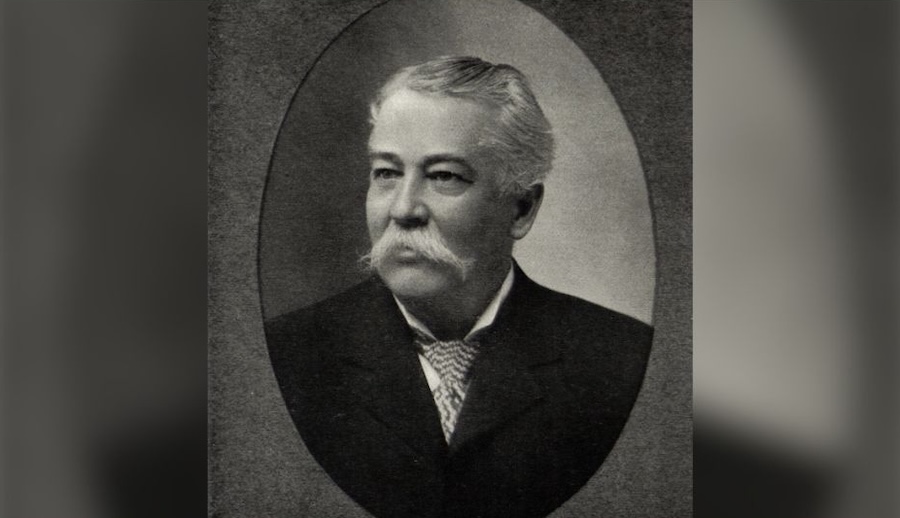
Denton specifically referenced William Wallace Tooker, the Sag Harbor researcher who became one of the island’s most important historians of Indigenous place names and language.
“William Wallace Tooker, who wrote about the Indians and about the names of towns, especially on eastern Long Island,” she wrote.
Tooker spent much of his life studying Long Island’s Indigenous history, language, and geography. According to Cornell University’s archive guide to his papers, his research focused heavily on “Indian place names on Long Island” along with Coastal Algonquian language and ethnology. Cornell University Archive Guide to the William Wallace Tooker Papers
Tooker eventually became one of the leading specialists on Coastal Algonquian culture during the late 1800s and early 1900s. Cornell’s archives describe him as “widely recognized as one of his era’s leading specialists” in Native culture, history, and place names.
What makes the story more Long Island than academic is that Tooker never really left eastern Long Island behind.
According to the Native Long Island project, he spent his entire life in Sag Harbor and began collecting Native artifacts as a child. By the 1890s, his collection reportedly contained roughly 15,000 pieces. Native Long Island – William Wallace Tooker
In 1911, he published The Indian Place-Names on Long Island and Islands Adjacent, one of the most important surviving studies of Long Island place-name origins.
Some of the names he researched are still among the most recognizable on Long Island today:
- Ronkonkoma, generally associated with boundary markers or “border fishing place,” likely tied to the lake’s role between tribal territories.
- Massapequa, often translated as “great water land” or “place near the great water.”
- Patchogue, believed to derive from a Native term connected to water, fishing, or branching waterways.
- Setauket, tied to the Setalcott people who inhabited the area.
- Speonk, commonly interpreted as “high place.”
- Quogue, believed to refer to marshy or shaking ground.
- Montauk, derived from the Montaukett people who occupied the East End.
- Moriches, connected to Meritces, a Native leader recorded by colonial settlers.
- Canarsie, named for the Canarsie people who lived in what is now Brooklyn.
The meanings are not always exact.
Spellings changed repeatedly over centuries, and colonial clerks often wrote Native words phonetically based on how they sounded to English ears. The same place might appear under several different spellings in old land records.
Still, many of those names survived remarkably intact.
That means modern Long Islanders still casually use words that were already old when George Washington traveled through the region.
Photo: findagrave.com