- Restaurant Depot started in 1976 in Brooklyn as Jetro Cash and Carry
- The company was founded by South African-born businessman Nathan “Natie” Kirsh
- Kirsh created the business after studying how small New York retailers sourced goods and finding it inefficient
- The original model was “cash and carry,” meaning customers shop in person instead of relying on delivery
- By eliminating delivery and credit, the company was able to offer lower prices than competitors
- Jetro sales teams originally went store to store convincing small shop owners to switch to the model
- Early customers included bodega owners and small independent retailers across New York
- Restaurant Depot was acquired in 1994 and became the company’s main growth engine
- The company separated restaurant customers from bodega customers to improve efficiency
- Jetro and Restaurant Depot operate as sister companies under Jetro Holdings
- The company operates 166 warehouse locations across 35 states
- It serves more than 725,000 independent restaurants and foodservice operators
- The business generates about $16 billion in annual revenue
- It produces roughly $2.1 billion in EBITDA and about $1.9 billion in free cash flow
- The company has maintained about 30 years of consistent EBITDA growth
- The cash and carry foodservice market is estimated to be worth $60 billion to $70 billion
- Restaurant Depot is considered a primary supplier for many small independent restaurants
- The warehouses are designed as one-stop shops for fresh, frozen and dry food products
- Customers can shop seven days a week and purchase goods on demand
- The company primarily serves independent restaurants, caterers, bodegas and small food businesses
- The model avoids delivery trucks, which helps reduce operating costs
- The company owns many of the properties where its warehouses are located
- It sells a large volume of perishable goods like meat and produce
- The business was initially dismissed by competitors as selling lower-tier products
- That same model eventually became one of the most dominant wholesale food supply systems in the U.S.
- Thousands of Long Island restaurants rely on these warehouses as a core part of their supply chain
The Founder Behind Restaurant Depot
Before the warehouses, before the national expansion, and long before the billions, there was one guy who saw a problem in how New York got its food and decided to rebuild the system from scratch.
Nathan “Natie” Kirsh is the reason Restaurant Depot exists.
- Nathan “Natie” Kirsh was born in 1932 in South Africa to Lithuanian Jewish immigrants
- He started his first business in 1958, a maize milling and malt operation
- In 1970, he entered wholesale food distribution by acquiring a South African company experimenting with cash and carry
- He used that model to supply small shopkeepers who lacked access to traditional distribution
- His business grew into one of the dominant food distribution operations in South Africa
- In the 1980s, financial issues tied to large real estate developments caused him to lose much of his fortune
- He retained control of a small U.S. operation called Jetro, which had just a few locations on the East Coast
- He moved to New York to rebuild the business from the ground up
- While in New York, he studied how small retailers sourced goods and saw inefficiencies in the system
- In 1976, he founded Jetro Cash and Carry in Brooklyn
- The model focused on customers coming to the warehouse instead of relying on delivery
- In 1994, he acquired Restaurant Depot, which became the company’s main growth driver
- He built Jetro and Restaurant Depot into a nationwide wholesale network
- Kirsh remained a majority owner of the business decades later
- Despite his success, he kept a low public profile and rarely gave interviews
- His wealth has been estimated in the billions, largely tied to the growth of the company and real estate holdings
And one more thing Long Islanders will appreciate: this whole empire was built around serving the little guy. Not giant chains. Not glamorous flagship stores. Independent restaurants, bodegas and food businesses. Which means a massive deal like this is not just about corporate finance. It is about the supply chain behind the pizza places, delis, caterers and neighborhood spots that make Long Island taste like Long Island.
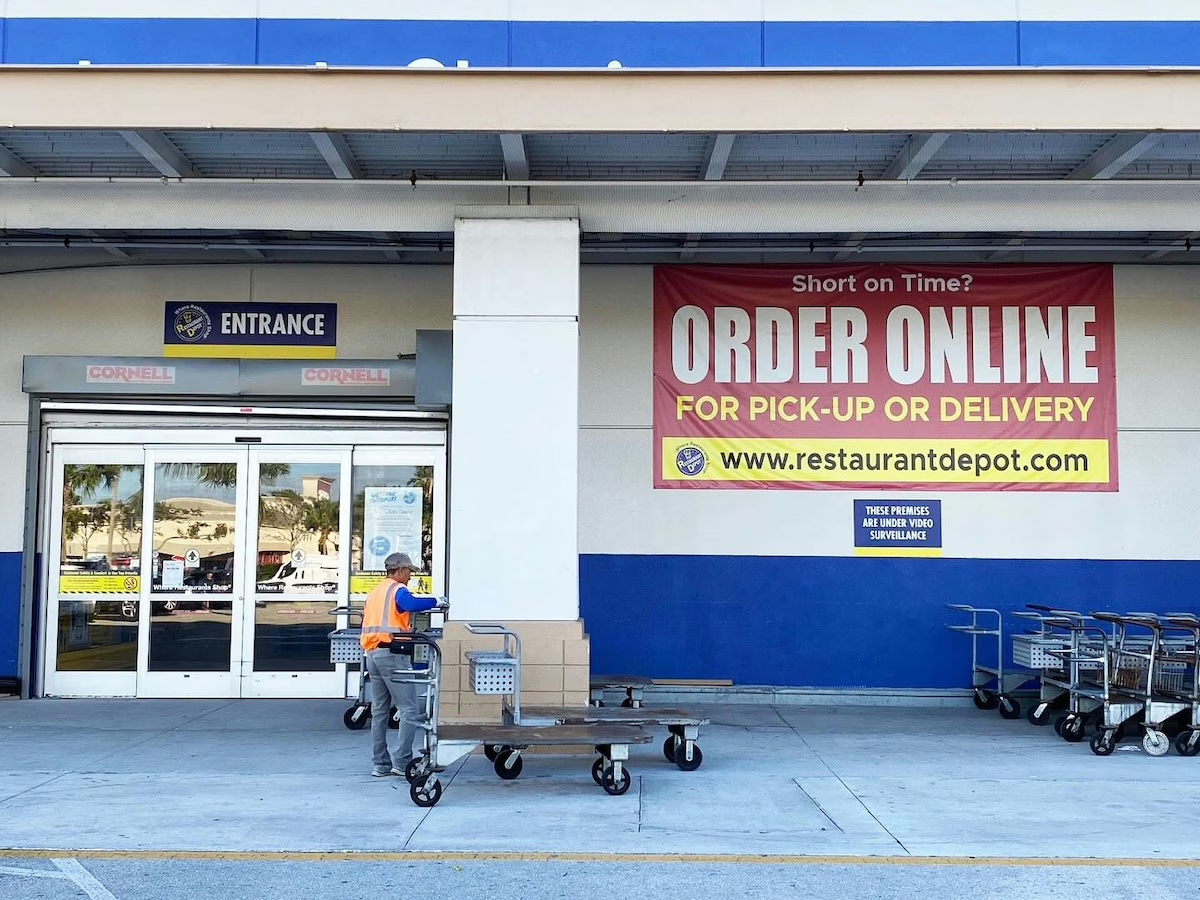
Photo: Restaurant Depot Facebook page.