There’s something about old Long Island photos that feels familiar until you actually read the details. Then suddenly, you realize just how different things used to be.
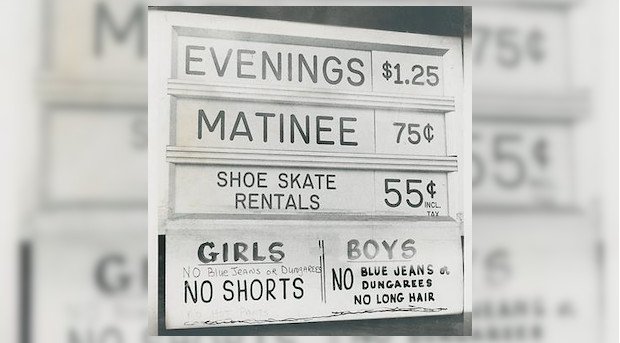
A 1972 photo from the Levittown Arena roller rink does exactly that. At first glance, it looks like a simple sign listing prices. But once you start reading the rules at the bottom, it turns into a time capsule of how things worked and what was considered acceptable at the time.
And yes, some of it would not fly today.
The Levittown Arena rink, which operated from 1955 to 1986, was once a go to spot for skating, music, and weekend hangouts. The building sat on a 3.7 acre lot that eventually became too valuable to keep as a rink as real estate prices climbed.
But in 1972, this was still very much the place to be.
What It Cost to Skate
The prices alone feel like a different universe:
- Evening admission: $1.25
- Matinee admission: 75 cents
- Shoe skate rentals: 55 cents (including tax)
For a little over a dollar, you could spend the night skating on a full size 100 by 200 foot floating maple wood floor. The rink even had a live organist, Eileen Poole, providing music during sessions, something you definitely do not see anymore.
But the real story is not the prices. It is the rules.
The Rules That Stopped People at the Door
At the bottom of the sign, the rink laid out exactly who could and could not come in, based entirely on what they were wearing.
- Girls: No blue jeans or dungarees, no shorts
- Boys: No blue jeans or dungarees, no long hair
Take a second to process that.
If you showed up in jeans, you were not getting in. If you were a guy with long hair, also not getting in. Even something as normal today as wearing shorts was enough to be turned away.
If you’re liking this story click here to read “A Look Back at Rocky Point’s Long-Gone Drive-In Theater”
It was a strict dress code that reflected the social norms of the early 1970s, when roller rinks often tried to maintain a certain image and atmosphere. These weren’t just casual hangout spots. They were controlled environments with expectations about behavior and appearance.
You’ve probably passed places like this your whole life without realizing how regulated they once were.
More Than Just a Rink
The Levittown Arena was not just about skating laps. It had organized programs, professional coaches, and even speed skating instruction. Names like George and Gladys Werner, Jack Burton, and Honey Gilmetti were part of the rink’s coaching lineup, helping develop skaters at different levels.
There were themed events, dance sessions, and structured activities that made it feel closer to a community hub than just an entertainment venue.
That is part of what makes the rules so interesting. They were not random. They were part of maintaining a specific kind of environment that the operators believed would keep things orderly and appealing.
Why It Disappeared
By the mid 1980s, the writing was on the wall. The land itself became more valuable than the rink sitting on it. Like many Long Island landmarks, it was ultimately a real estate decision.
The rink closed in 1986 and the property was sold, later becoming part of a chain retail site.
It is a familiar story across Long Island. Places that once defined entire neighborhoods quietly disappear, replaced by something more profitable.
A Small Sign That Says a Lot
That one sign from 1972 captures more than just prices and rules. It shows how different everyday life was, even in something as simple as going out to skate.
Today, the idea of banning jeans or turning someone away for their hairstyle feels almost absurd. But at the time, it was just part of the experience.
If you grew up on Long Island, chances are you or someone you know spent time at a rink like this. And if you look closely at that sign, you might even start wondering what you would have had to change just to get through the door.
Photo: Long Island Daily Press, August 17, 1972. Copyright holder unknown.