An 80-mile Theodore Roosevelt historic tourism trail is being planned across Long Island, connecting Oyster Bay, Sayville and Montauk through places tied to some very different chapters of the 26th president’s life.
The Theodore Roosevelt Historic Tourism Trail was announced Sept. 14 during an event at Meadow Croft in Sayville marking the 125th anniversary of Roosevelt becoming president. Suffolk County Executive Ed Romaine joined local officials at the event, held at the former estate of Roosevelt’s cousin John Ellis Roosevelt.
Officials envision a route stretching roughly 80 miles from Roosevelt’s longtime home in Oyster Bay east to Montauk, with historical signs placed along the route. The project remains in the planning stages.
The route would effectively connect two separate pieces of Roosevelt’s Long Island history: a remarkable presidential horseback trip from Oyster Bay to Sayville in 1903, and his time at Montauk with the Rough Riders after returning from Cuba five years earlier.
The trail begins with Roosevelt’s Long Island home
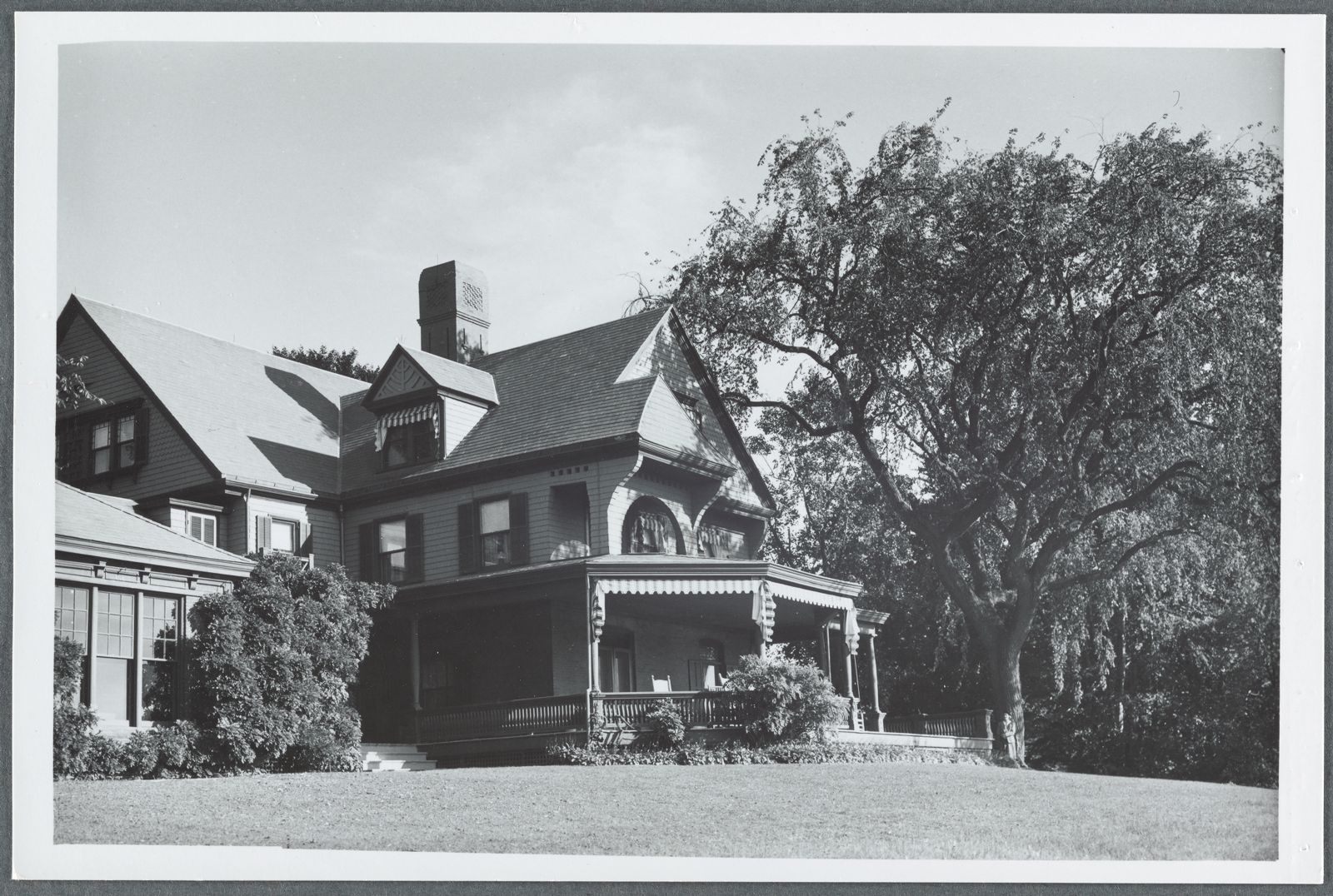
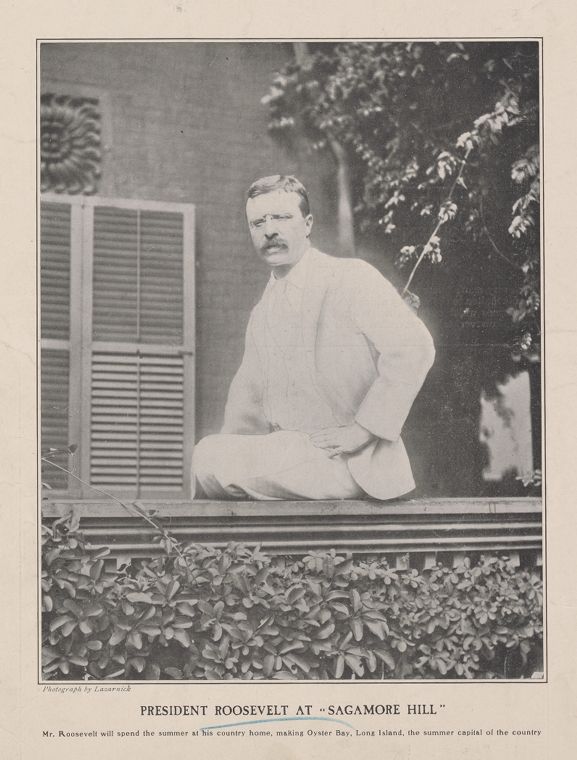
At the western end of the story is Sagamore Hill. Roosevelt made Sagamore Hill his home beginning in 1885 and lived there until his death in 1919. The 23-room house became nationally known as the “Summer White House” during his presidency. The National Park Service says Roosevelt used Sagamore Hill as his Summer White House for seven summers, from 1902 through 1908, receiving political leaders and other prominent visitors there.
Today, Sagamore Hill National Historic Site preserves 83 acres surrounding the Roosevelt home.
Roosevelt was not actually born on Long Island. He was born in Manhattan on Oct. 27, 1858, but Oyster Bay became his longtime home and remained central to his life through his presidency and afterward.
Roosevelt once rode 35 miles across Long Island to Sayville
Sayville’s connection to the trail comes from one of the more unusual trips made by a sitting president. In July 1903, Roosevelt rode on horseback from Sagamore Hill to the South Shore.
A National Park Service historical study records contemporary press accounts describing Roosevelt riding to his uncle Robert Barnwell Roosevelt’s home, about 35 miles from Sagamore Hill. A local historical inventory, citing the Suffolk County News from July 24, 1903, dates the ride to July 23 and says Roosevelt traveled with his son Theodore Jr. and two young Roosevelt relatives through Smithtown and Ronkonkoma before reaching Sayville.
Roosevelt visited family during the trip and had lunch at Meadow Croft, the estate of his cousin John Ellis Roosevelt. The dining table used during that 1903 visit was later returned to the house as part of its restoration. Meadow Croft remains standing at 299 Middle Road.
The property combines an earlier farmhouse with a larger Colonial Revival section designed by local architect Isaac H. Green in 1891 and 1892. Surviving outbuildings include a stable and barn, coach house and caretaker’s cottage. Suffolk County says the estate is dedicated to the Suffolk County Historic Trust and is listed on the National Register of Historic Places. That history explains why officials chose Meadow Croft for the Sept. 14 announcement.
It is also an important distinction in understanding the new trail: the documented 1903 horseback ride was between the Oyster Bay and Sayville areas. It should not be described as an 80-mile Roosevelt horseback ride to Montauk. Montauk enters the Roosevelt story for an entirely different reason.
Montauk was part of the Rough Riders story
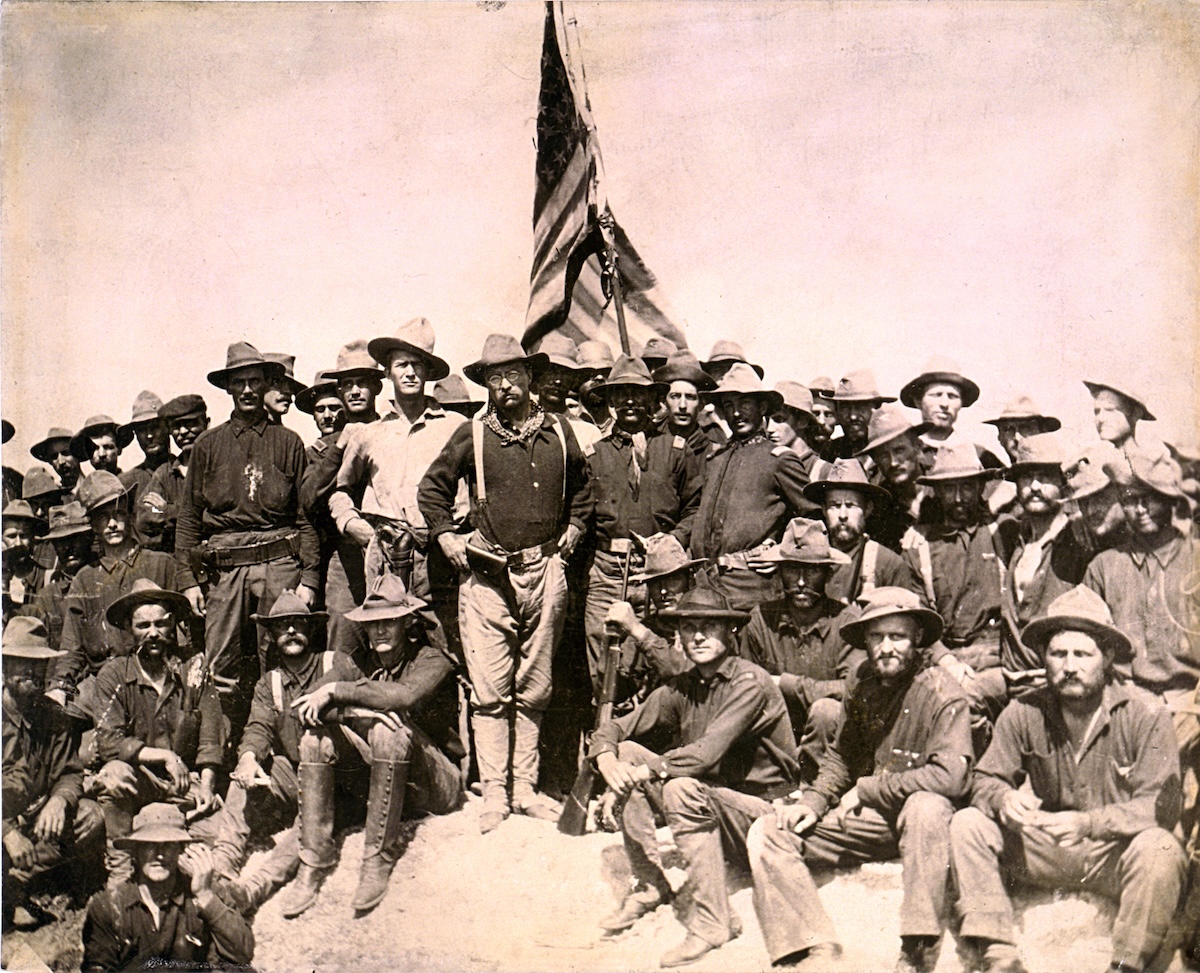
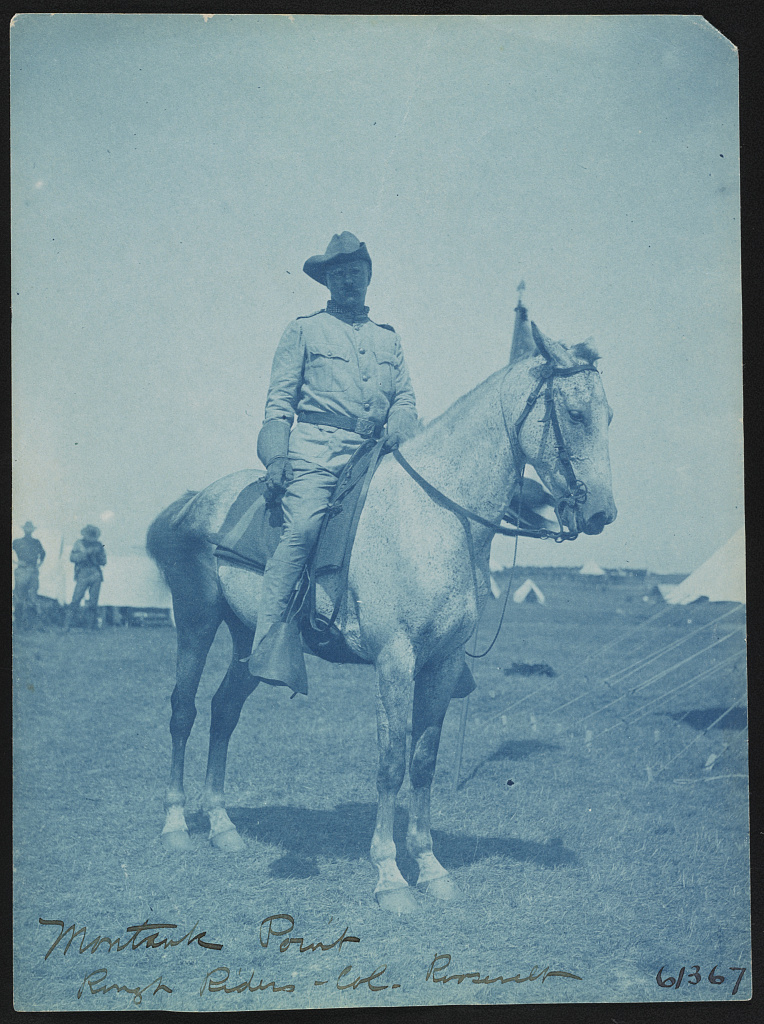
Five years before the Sayville ride, Roosevelt arrived in Montauk following the Spanish-American War. Roosevelt had left his position as assistant secretary of the Navy in 1898 and served with the 1st U.S. Volunteer Cavalry, famously known as the Rough Riders. After the fighting in Cuba, Roosevelt and the Rough Riders were sent to Camp Wikoff at Montauk.
Suffolk County identifies Camp Wikoff as the area where Roosevelt and the Rough Riders recuperated after the Battle of San Juan Hill. Third House, an older cattle keeper’s residence in what is now Montauk County Park, served as Camp Wikoff headquarters while Roosevelt and his men were quarantined there following the war.
Third House survives today, and Suffolk County says a Spanish-American War exhibit there includes photographs and memorabilia related to the war and Camp Wikoff.
That gives the planned tourism trail a progression: Roosevelt’s home and Summer White House in Oyster Bay, his 1903 family visit to Sayville, and the site in Montauk connected to the Rough Riders and the war that helped make him a nationally known figure.
The announcement came exactly 125 years after Roosevelt became president
The date chosen for the announcement also had historical significance. President William McKinley died on Sept. 14, 1901, after being shot eight days earlier in Buffalo. Roosevelt, then vice president, was sworn in as the 26th president that afternoon at the home of Buffalo lawyer Ansley Wilcox. He was 42, making him the youngest person ever to become president.
Roosevelt later won the presidency in his own right in 1904. His presidency also produced a conservation record closely associated with his legacy. The National Park Service says Roosevelt protected approximately 230 million acres of public land and established 150 national forests, 51 federal bird reserves, four national game preserves, five national parks and 18 national monuments. His administration also created the U.S. Forest Service. In 1906, Roosevelt received the Nobel Peace Prize for his role in helping bring an end to the Russo-Japanese War.
Roosevelt’s Long Island story ended where it began
After leaving the White House, Roosevelt continued to make Sagamore Hill his home. He died there on Jan. 6, 1919, at age 60. His body lay in state inside Sagamore Hill before he was buried at Youngs Memorial Cemetery in Oyster Bay, about a mile from the house. More than a century later, many of the Long Island places connected to Roosevelt remain.
Sagamore Hill survives in Oyster Bay. Meadow Croft survives in Sayville. Third House and the former Camp Wikoff grounds remain in Montauk. The planned Theodore Roosevelt Historic Tourism Trail would connect those locations across roughly 80 miles of Long Island, using historical signage to tell a story that spans Roosevelt’s family life, presidency and military service. Exactly what the completed route will look like, how it will be marked and what it will ultimately cost have not yet been announced.
SOURCES
- https://nypost.com/2026/09/14/us-news/long-island-is-opening-an-80-mile-trail-to-montauk-in-honor-of-teddy-roosevelt/
- https://islipny.gov/news/press-releases/699-county-town-officials-mark-125th-anniversary-of-theodore-roosevelt-s-presidency
- https://www.nps.gov/places/roosevelt-home.htm
- https://www.nps.gov/sahi/learn/historyculture/index.htm
- https://home.nps.gov/sahi/index.htm
- https://www.nps.gov/sahi/learn/historyculture/upload/HRS_TRH_SAHI_2007.pdf
- https://www.connetquotlibrary.org/adult-and-information/buildings/Sayville/Middle%20Road/Middle%20Road%20Roosevelt%20home%201979%20inventory.pdf
- https://suffolkcountyny.gov/departments/parks/historic-sites/meadow-croft
- https://bayportbluepointheritage.org/meadow-croft/
- https://www.suffolkcountyny.gov/Departments/Parks/Our-Parks/Montauk-County-Park
- https://suffolkcountyny.gov/Departments/Parks/Historic-Sites/Deep-Hollow-Guest-Cattle-Ranch
- https://www.nps.gov/thri/september14.htm
- https://www.nps.gov/thri/theodorerooseveltbio.htm
- https://www.nps.gov/people/life-of-theodore-roosevelt.htm
- https://www.nps.gov/thro/learn/historyculture/theodore-roosevelt-and-conservation.htm
- https://www.nobelprize.org/prizes/peace/1906/roosevelt/facts/
Header photo: By William Dinwiddie, Public domain, via Wikimedia Commons
Photo: 2: Sagamore Hill, Theodore Roosevelt’s Oyster Bay home, photographed Sept. 26, 1955. Photo by Max H. Hubacher / The New York Public Library Digital Collections.
Photo: 3 President Theodore Roosevelt at Sagamore Hill in Oyster Bay in 1902, during the period when the Long Island estate served as his home and, during his presidency, his Summer White House. The Miriam and Ira D. Wallach Division of Art, Prints and Photographs: Print Collection, The New York Public Library. “President Roosevelt at ‘Sagamore Hill.’” 1902.
Photo 4: Johnston, F. B., photographer. (1898) Montauk Point Rough Riders – Col. Roosevelt. New York Montauk Point, 1898. [Photograph] Retrieved from the Library of Congress, https://www.loc.gov/item/2013651527/.