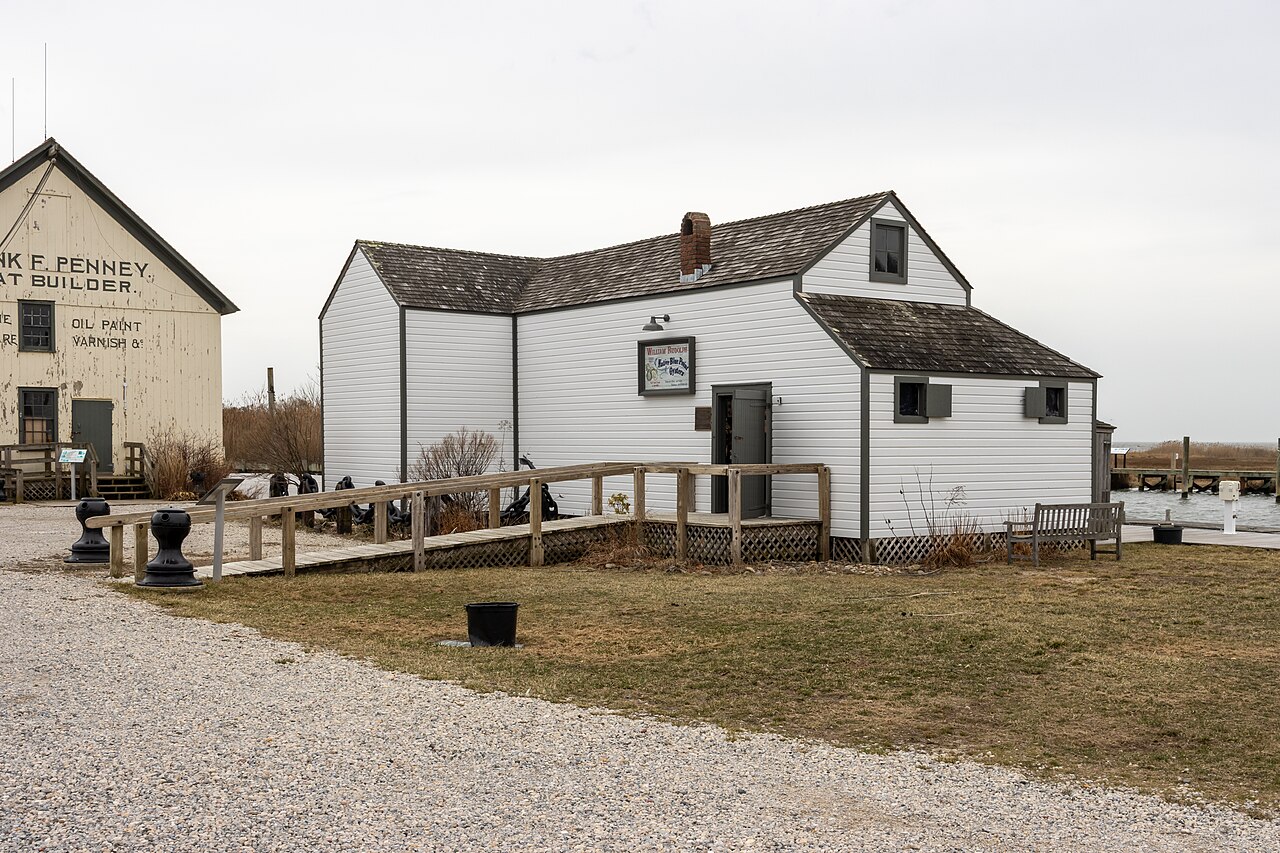
A small wooden building on the grounds of the Long Island Maritime Museum in West Sayville is one of the few surviving examples of the oyster-processing facilities that once operated along the Great South Bay. Built in 1908, the Rudolph Oyster House was used to sort, open and prepare Blue Point oysters for shipment to markets across the country. It remained in operation until 1947, when the business that had occupied it closed.
The building was eventually saved from demolition and relocated approximately 600 feet to the museum in 1974. Its original equipment and many of its architectural features remain intact, providing an unusually complete record of Long Island’s once-important commercial oyster industry. In 2001, the Rudolph Oyster House was designated a National Historic Landmark.
When Blue Point Oysters Were Big Business
During the late 19th and early 20th centuries, the Great South Bay supported one of the most productive oyster industries in the United States. Blue Point oysters were prized for their flavor and quality, and the name became closely associated with oysters harvested from the waters along Long Island’s South Shore.
Oystering had been part of the local economy for centuries, but commercial production expanded considerably during the 1800s as improvements in transportation and refrigeration allowed fresh seafood to reach more distant markets. Oyster companies leased underwater grounds, cultivated shellfish and employed workers to harvest, process and ship their products.
Click here for more stories about Long Island’s maritime history.
West Sayville became an important center of this activity, helped by the arrival of Dutch immigrants who brought experience in oyster cultivation and harvesting. The town’s waterfront developed into a working area filled with boats, processing facilities and businesses connected to the shellfish trade.
By the turn of the 20th century, Great South Bay oysters were being shipped throughout the United States and overseas. Commercial oyster cultivation had become a substantial industry, employing baymen, dredge operators, shuckers, packers and other workers throughout the South Shore communities.
The William Rudolph Oyster Company
William Rudolph established his oyster company in West Sayville in 1895, although he had been involved in the trade for years before opening the business. The son of Dutch immigrants, Rudolph worked as an independent oyster buyer by at least 1887, purchasing shellfish from local baymen and shipping them to New York City.
His operation expanded steadily during the 1890s. By 1898, Rudolph was cultivating between 75 and 100 acres of oyster beds in the Great South Bay and employing approximately 15 to 20 workers. His company marketed Native Blue Point oysters and supplied customers in New York and other markets.
The business required more than a few boats and a waterfront shed. Oyster companies managed underwater growing grounds, purchased seed oysters for cultivation and operated facilities where harvested shellfish could be sorted and prepared for distribution.
In 1908, Rudolph constructed a new oyster house on his Shore Road waterfront property in West Sayville. The rectangular wooden building, measuring approximately 44½ feet long and 16½ feet wide, was designed specifically for the processing work associated with the company’s commercial operations.
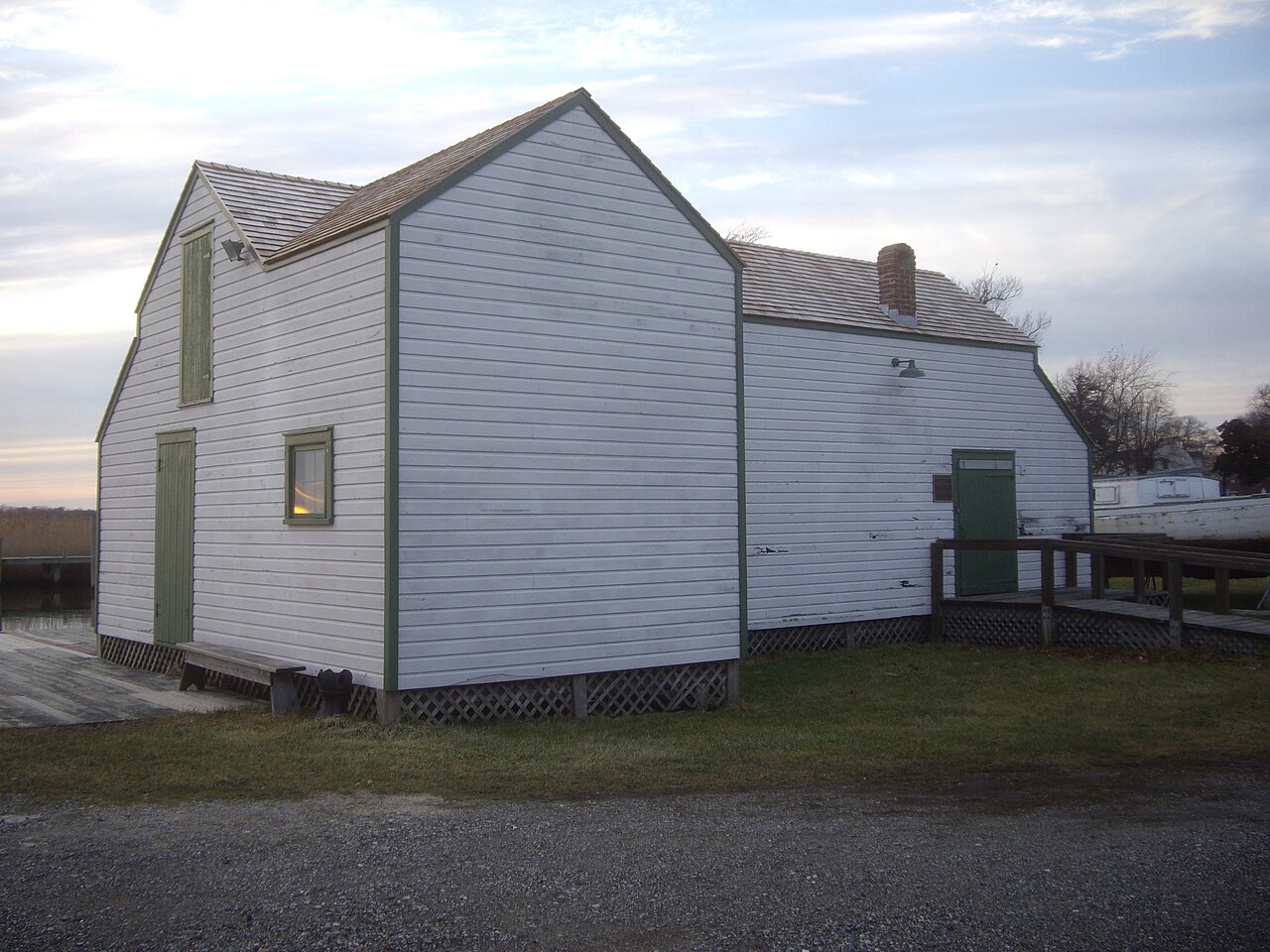
Photo: Dmadeo, CC BY-SA 4.0, via Wikimedia Commons
Inside an Early 20th-Century Oyster House
The Rudolph Oyster House was a functional industrial building, with an interior arranged around the work of sorting and opening oysters. Its relatively simple construction is an important reason the building has remained such a useful historical example.
Along one wall stood a long workbench where employees separated clusters of oysters, sorted them by size and opened shells. Protective wooden boards were installed behind the bench to prevent the sharp shells from damaging the interior siding.
Other features illustrate how the workers used the building:
- A skylight above the work area: Four adjoining windows provided natural light for sorting and shucking.
- A potbellied stove: Located on the opposite side of the room, the stove supplied heat during cold weather.
- A storage loft: An upper-level space was accessible by ladder and used to store supplies.
The building also contained an unusual form of insulation: dried seaweed placed within the structure. A small office addition was installed at an unknown date, while adjoining sheds provided storage space for oysters during winter.
Unlike many commercial buildings that underwent extensive remodeling as industries developed, the Rudolph Oyster House retained much of its original character. These surviving features helped establish its historical significance.
An Oyster Business With Customers Across the Country
The Rudolph company was part of a much larger commercial network. Oyster cultivation and shipping involved connections with other coastal communities, including Connecticut, where seed oysters were purchased and transported to Long Island for planting in the Great South Bay.
By 1904, Rudolph was receiving substantial quantities of seed oysters from Connecticut. In one week that May, three boatloads totaling 5,647 bushels arrived for planting on the company’s leased grounds.
The business also employed a considerable workforce during busy periods. In December 1908, Rudolph had 38 oyster openers working during one evening to complete a large order.
The scale of the operation was reflected in its shipping business. In January 1912, a local newspaper reported that Rudolph had shipped six railroad carloads of oysters to San Francisco during the preceding month. For a business based on the West Sayville waterfront, the California shipments demonstrated how far the market for Long Island oysters had expanded.
Rudolph continued to manage the company until his death in 1941 at the age of 87. His son George subsequently took over the business, which remained in the family after George’s death in 1943.
The company continued operating until 1947, ending more than 50 years of commercial activity under the Rudolph name.
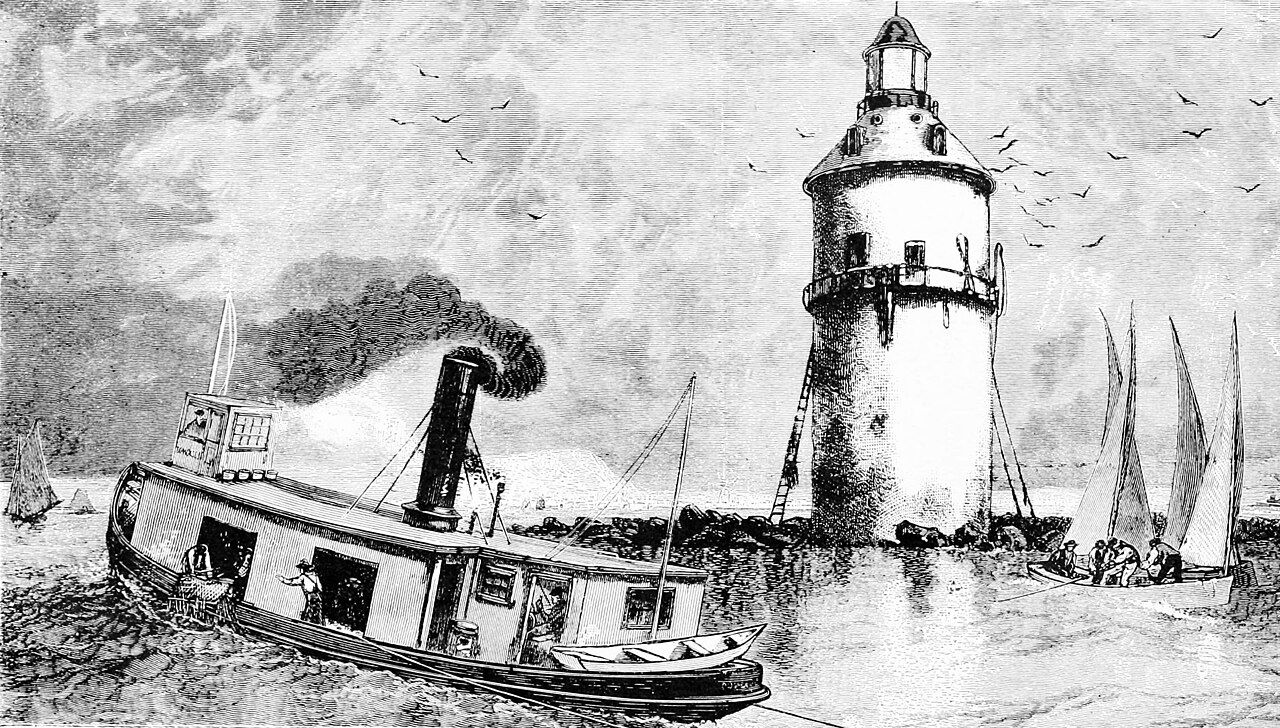
Photo: Oyster dredging in Long Island Sound, illustrated in the November 1893 issue of Popular Science Monthly. Credit: Popular Science Monthly, Vol. 44, via Wikimedia Commons. Public domain.
The Decline of Long Island’s Oyster Industry
Although the Great South Bay oyster industry had been extremely productive during the late 1800s and early 1900s, environmental changes and intensive harvesting gradually reduced its output.
The hurricane of 1938 altered conditions in the bay by opening a new inlet, changing salinity levels in the waters where oysters were cultivated. Overharvesting and increasing pollution also contributed to the decline of the oyster population.
By the 1950s, the industry that had supported numerous businesses and hundreds of workers along the South Shore had diminished substantially. Many of the waterfront facilities associated with oyster harvesting and processing were abandoned, demolished or converted to other uses.
The Rudolph Oyster House survived the initial decline, but the property where it stood eventually faced redevelopment. Without intervention, the building would have been demolished along with much of the Island’s remaining oyster-processing infrastructure.
Moving the Oyster House to the Maritime Museum
In 1974, the Long Island Maritime Museum, then known as the Suffolk Marine Museum, acquired the Rudolph Oyster House and arranged to move it approximately 600 feet from its original Shore Road location to the museum’s property.
The relocation kept the structure in West Sayville, close to the Great South Bay and within the same general waterfront setting where it had operated for decades. Although two attached storage sheds were removed before the move, the main building retained much of its original 1908 appearance.
After restoration, the oyster house opened to the public in 1976 as an exhibit devoted to the history of the Great South Bay oyster industry. Visitors could see a surviving commercial processing building rather than a reconstruction or a collection of equipment removed from its original setting.
The preservation effort was particularly important because few comparable structures had survived elsewhere. The National Park Service later described the Rudolph Oyster House as a rare example of a relatively unaltered early-20th-century seafood-packing facility.
National Historic Landmark Recognition
On August 7, 2001, the Rudolph Oyster House was designated a National Historic Landmark, recognizing its national significance in the history of seafood processing and commercial oyster production.
The National Park Service’s landmark nomination identified the building as the only known surviving structure from the Great South Bay’s turn-of-the-century Blue Point oyster industry. It was also recognized as an important example of the processing facilities that supported the American oyster trade during its period of greatest commercial activity.
National Historic Landmark designation is reserved for properties that illustrate significant aspects of American history. In this case, the importance of the building comes from its association with industrial practices, maritime commerce and the working lives of people employed in the oyster business.
The building is preserved at the Long Island Maritime Museum, located at 84 West Avenue in West Sayville. The museum’s collection of historic vessels and maritime artifacts provides additional context for the industries that once operated along Long Island’s waterfront.
A Surviving Piece of Long Island’s Maritime History
The Rudolph Oyster House is a reminder of how central the Great South Bay once was to Long Island’s commercial economy. Today, the waterfront is more commonly associated with recreational boating, fishing and residential communities, but a century ago oyster cultivation and processing were major sources of local employment and business activity.
West Sayville’s historic building preserves the equipment, working spaces and construction methods associated with that industry. Its survival is especially noteworthy because many similar facilities disappeared as commercial oystering declined and the South Shore waterfront changed.
More than a century after William Rudolph constructed the oyster house, the building remains an important example of Long Island’s maritime history. Visitors to the Long Island Maritime Museum can still see one of the few surviving structures associated with the oyster industry that helped shape the region.
Cover photo: Photograph by Mike Peel (www.mikepeel.net)., CC BY-SA 4.0, via Wikimedia Commons
Sources:
- National Park Service, “Rudolph Oyster House,” National Historic Landmark Nomination https://npgallery.nps.gov/NRHP/GetAsset/NHLS/01001052_text
- National Park Service, National Historic Landmarks Program, “Rudolph Oyster House” https://npgallery.nps.gov/AssetDetail/NRIS/01001052
- Long Island Maritime Museum, “Exhibits: The William Rudolph Oyster House” https://www.limaritime.org/exhibits.html
- Long Island Traditions, “West Sayville Maritime Survey Report” https://longislandtraditions.org/wp-content/uploads/2020/07/wsayville_maritimerprt.pdf
- Suffolk County Parks, “Long Island Maritime Museum” https://suffolkcountyny.gov/Departments/Parks/Historic-Sites/Long-Island-Maritime-Museum
- Sayville Library, “Sayville Historic Driving Tour” https://www.sayvillelibrary.org/sites/default/files/2020-11/SAYVILLE_HISTORIC_DRIVING_TOUR.pdf