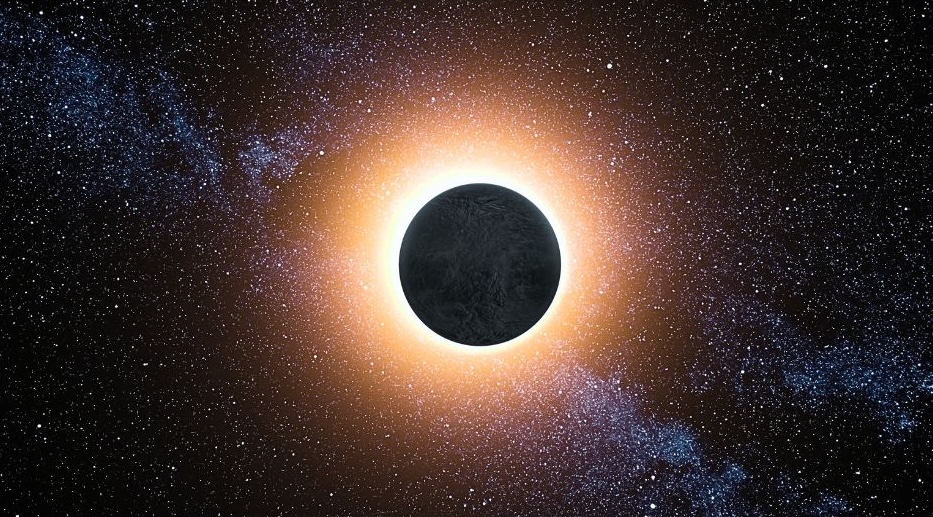
Social media feeds will soon be filled with breathless posts, dramatic maps and promises of a total solar eclipse on Wednesday, Aug. 12. That is all true, but sadly, not for Long Island.
The eclipse will be total across parts of Greenland, Iceland, northern Russia and Spain, along with a small corner of Portugal. Long Island is far outside that narrow path and will see only a minor partial eclipse.
At its peak, the Moon will cover only about 10% of the Sun as seen from Long Island. In other words, instead of the Sun disappearing, viewers will see what looks like a small bite missing from one edge.
Do not expect the sky to turn dark. Streetlights will not flicker on, birds will not suddenly head home and the afternoon will probably look like any other summer day unless you are viewing the Sun through proper eclipse glasses.
When can Long Island see it?
The partial eclipse will begin at approximately 1:07 p.m. on Aug. 12.
Maximum coverage will occur at about 1:55 p.m., when roughly one-tenth of the Sun will be blocked. The eclipse will end around 2:41 p.m. Exact times may vary slightly depending on where someone is watching from across Nassau and Suffolk counties.
NASA lists nearby New York City at 9% coverage, while calculations for Long Island place the Island at roughly 10%. That makes this a real eclipse, technically speaking, but not the kind of event that will recreate the sudden darkness Long Islanders experienced during the April 2024 eclipse.
So where is the real show?
The path of totality will sweep across Greenland, Iceland and northern Spain before reaching a small portion of Portugal. People inside that path will see the Moon completely cover the bright face of the Sun for up to approximately 2 minutes and 18 seconds.
Some locations in Spain will experience totality close to sunset, creating what could be one of the most photographed astronomy events of the year. Space.com reports that eclipse travelers are expected to gather across Spain, Iceland and Greenland for the full show.
Those images, videos and livestreams are likely what Long Islanders will see circulating online. Just remember that the view outside your own window will be much less dramatic.
Yes, eclipse glasses are still required
Even with only about 10% of the Sun covered, it is never safe to stare directly at the eclipse without proper eye protection.
Viewers should use eclipse glasses or handheld solar viewers that meet the ISO 12312-2 safety standard. Regular sunglasses are not safe, no matter how dark they are.
Anyone using binoculars, cameras or telescopes must place a specially designed solar filter over the front of the device. Eclipse glasses alone will not protect someone looking through magnifying equipment. NASA also recommends indirect viewing methods, including pinhole projectors.
The best view may be online
NASA will stream the total solar eclipse beginning at 1:15 p.m. EDT on Aug. 12, featuring live views from locations inside the path of totality.
That may be the best option for Long Islanders hoping to see the Sun completely disappear.
Locally, the eclipse will be more of a celestial nibble than a cosmic blackout. It is worth stepping outside with eclipse glasses if the weather cooperates, but anyone expecting another major daytime spectacle may be left wondering what all the fuss was about.