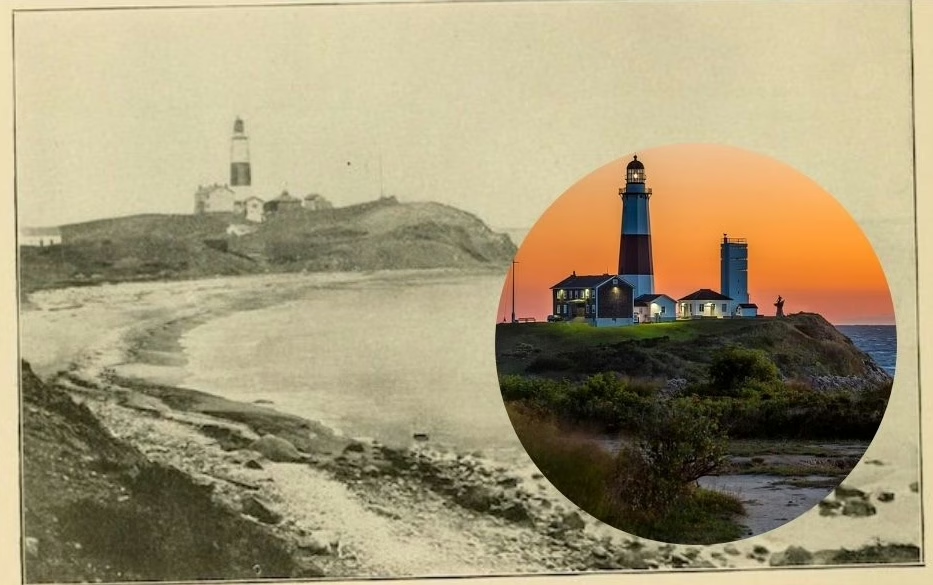
If you’ve ever stood on the bluffs at Montauk and looked out over the Atlantic, you’ve probably felt like you were at the very edge of Long Island.
What you might not realize is that beneath those grassy hills at Camp Hero State Park sits one of the most powerful coastal defense systems ever built in the United States.
And yes—those “hills” weren’t always just hills.
The Hidden Giants of Camp Hero
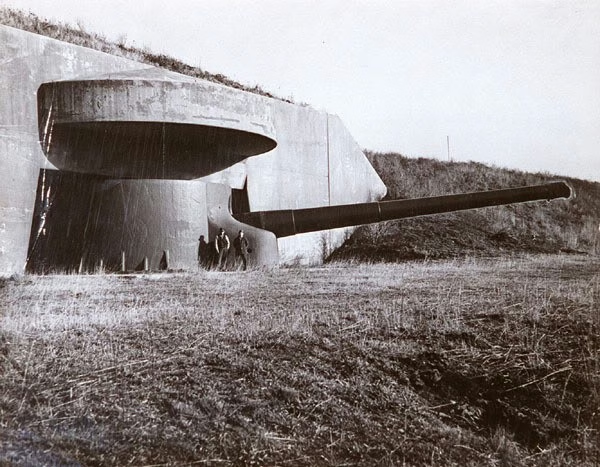
During World War II, Montauk became home to four enormous 16-inch guns, spread across two batteries known as Battery 112 and Battery 113.
If you like this story then you’ll love this one! Click here to read “The F-14 Tomcat: How Long Island Built One of America’s Most Iconic Fighter Jets”
These weren’t just big—they were among the largest coastal defense guns ever installed in the country.
- Each battery held two 16-inch guns, meaning four total at Camp Hero
- The guns were completely concealed inside reinforced concrete bunkers
- Man-made hills were built on top to hide them from enemy ships and aircraft
You’ve probably driven past them without realizing what you were looking at.
A Fortress Beneath the Surface
What looked like simple dunes from the outside was actually a small underground world.
- Each battery was connected by roughly 500 feet of underground tunnels
- These tunnels stored massive shells and powder charges
- The complex included generators, crew quarters, and even latrines
It wasn’t just a gun emplacement—it was a self-contained military installation built to operate under combat conditions.
And it was designed to withstand a direct attack.
Built Fast—and Built Big
Construction of Battery 112 began in March 1942, just months after the U.S. entered World War II.
- Completed in June 1943
- Cost $1,372,528.61 at the time (millions more in today’s dollars)
That speed tells you everything about the urgency. Long Island wasn’t just watching the war—it was preparing for the possibility it could arrive offshore.
Watch a News 12 video about Montauk’s big guns:
The Guns Themselves
The weapons installed at Camp Hero were engineering monsters.
- One gun was a 16-inch M1 (serial number 73) built by Bethlehem Steel
- The other was a Mark II (serial number 92) produced by the U.S. Naval Gun Factory in New York
- Each gun stretched about 68 feet long
- They could fire shells up to 24 miles out into the Atlantic
That means anything approaching Long Island’s coastline would have been well within range.
Designed to Cover the Coast
The positioning of the batteries wasn’t random.
- Battery 112 and Battery 113 were angled differently along the shoreline
- Together, they created overlapping fields of fire
- The system was designed to cover a wide arc of ocean approaches
In simple terms: if a hostile ship showed up, it wouldn’t have many safe angles.
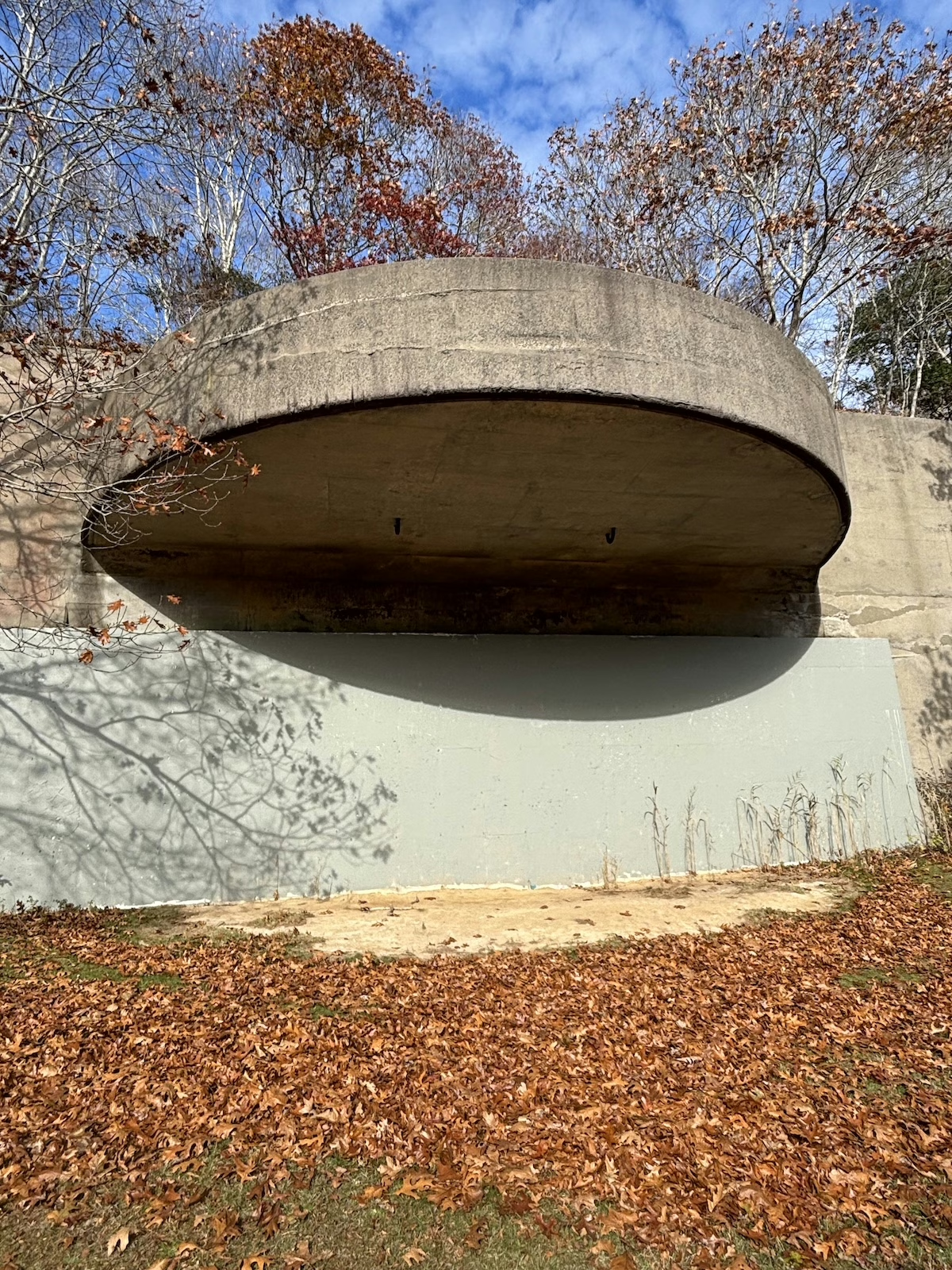
Photo: Lon S. Cohen
The End of the Big Guns
As powerful as they were, these massive guns didn’t stay relevant for long.
- Advances in air power and missile technology made coastal guns obsolete
- By the mid-1950s, the batteries were no longer needed
- In 1957, the base was transferred from the Army to the Air Force
The biggest guns on Long Island quietly faded into history.
The Part Most People Miss
Today, those massive weapons are gone—but the structures remain.
And that’s the wild part.
You can walk right through Camp Hero State Park, stand on those grassy mounds, and never realize you’re standing on top of what was once a hidden fortress designed to defend the entire coast.
It’s one of those Long Island details that’s easy to miss…
Until you know what you’re looking at.
Cover photo: Unknown origin.