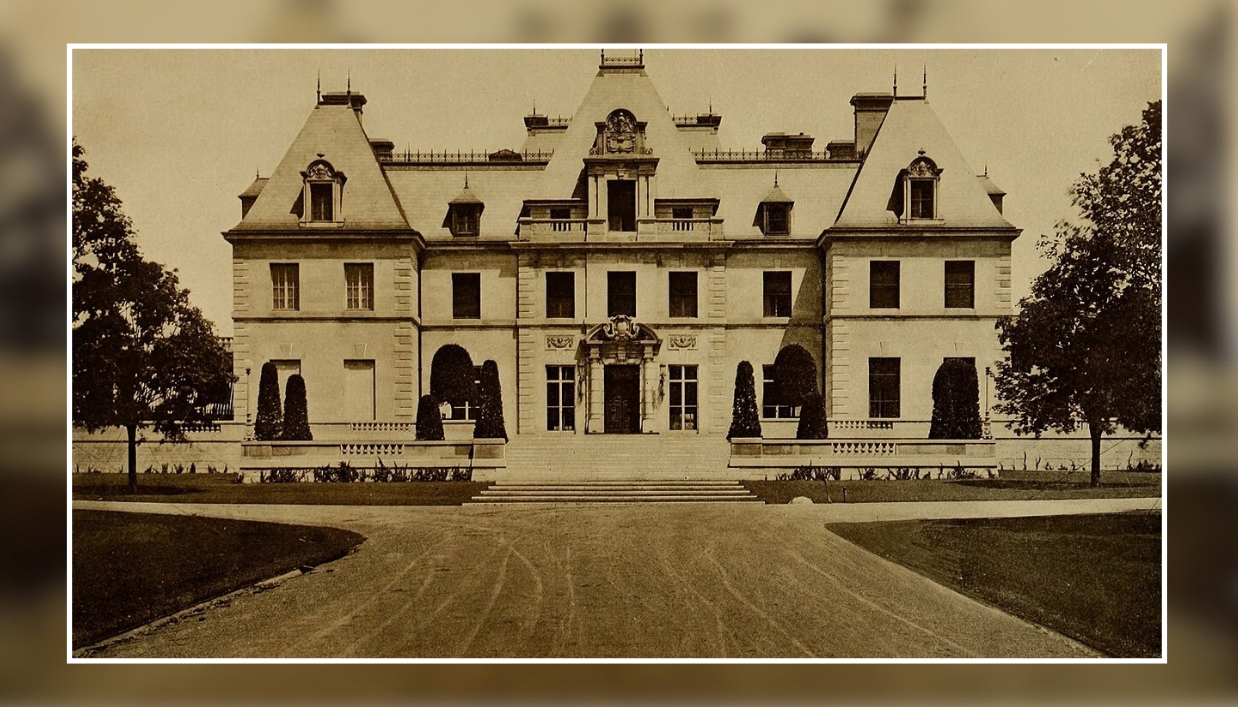
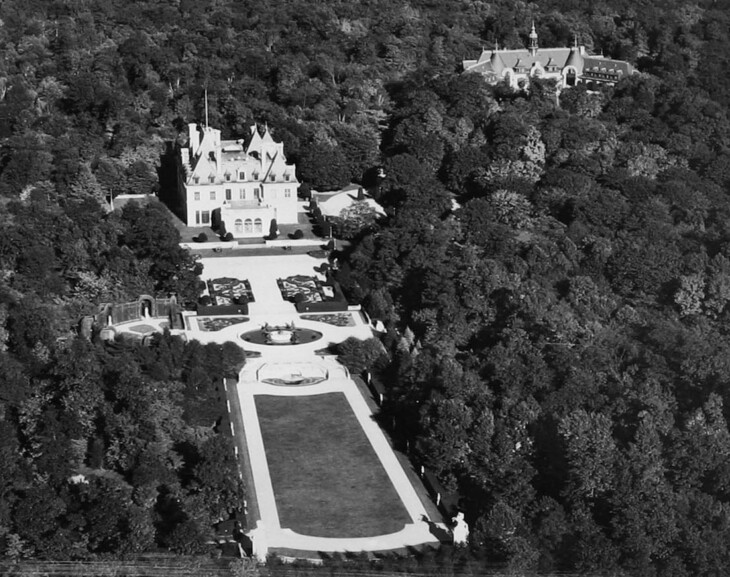
The Harbor Hill estate in East Hills is remembered for its mansion, elaborate grounds and Gold Coast society events. During World War II, however, part of the former Mackay property was put to a very different use.
The Army established an air-defense installation off Harbor Hill Road connected to First Fighter Command. Buildings and access roads were constructed on the property, but there was an unusual requirement: for purposes of secrecy, the installation was intentionally designed not to look like a military base.
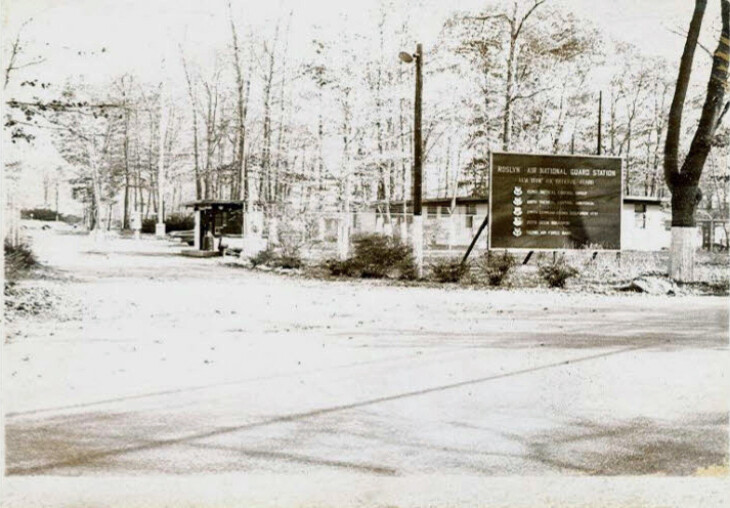
The site became known as the Roslyn Filter Center. Its Fighter Control Center received information from radar stations and ground observers and used it to identify and classify aircraft operating over the New York metropolitan area. Aircraft that could not be identified could be intercepted as part of the region’s air-defense system.
Roslyn’s military importance continued into the Cold War.
Click here for more stories about Long Island’s historic landmarks.
The U.S. Air Force’s 26th Air Division moved its headquarters from Mitchel Air Force Base to Roslyn in April 1949. From East Hills, the division helped direct the defense of a large multi-state sector that included all of Massachusetts, Connecticut, Rhode Island and New Jersey, along with portions of New York, Pennsylvania and Delaware.
The system extended beyond Air Force fighter aircraft. Army Nike missiles and antiaircraft guns, Navy radar picket ships and aircraft, and other Air Force units were among the forces coordinated as part of the regional defense network.
Roslyn also has a connection to one of the stranger chapters of Cold War history. The 26th Air Division was briefly involved in Project Blue Book, the U.S. Air Force program that investigated reports of unidentified flying objects.
The 26th Air Division headquarters left Roslyn in 1958, but the property’s military history was far from over. Beginning in 1959, Air National Guard units occupied the station, including the 152nd Tactical Control Group.
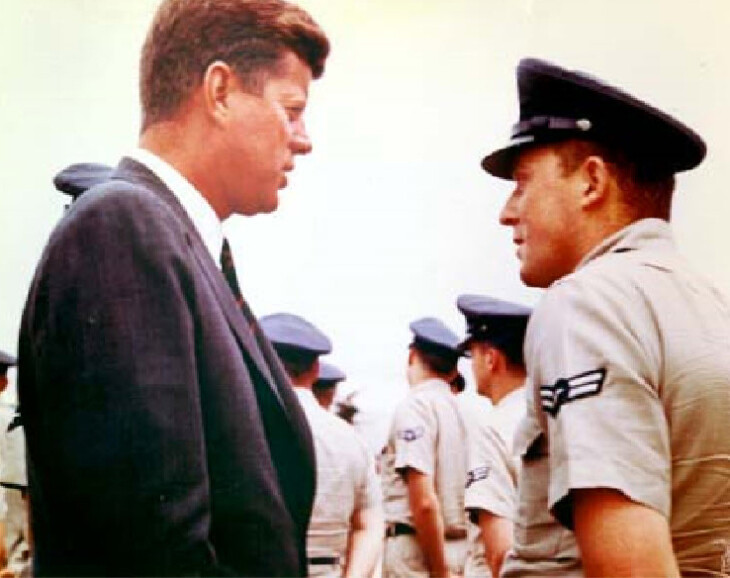
During the 1961-62 Berlin Crisis, President John F. Kennedy visited Air National Guard personnel at Roslyn. The 152nd Tactical Control Group was called to active duty during the crisis, and about 2,000 of its officers and airmen were deployed to West Germany for approximately 10 months.
The contrast with the property’s earlier history is considerable. Harbor Hill had hosted the Prince of Wales in 1924 and a reception for Charles Lindbergh in 1927. A portion of the same Gold Coast property later became part of the military network watching the skies during World War II and the Cold War, participated briefly in Project Blue Book and received a visit from President Kennedy during one of the Cold War’s major confrontations.
The Harbor Hill mansion itself was not converted into the military base. The installation occupied a separate portion of the former estate property.
And that military property is still easy to find today, although almost nothing about it suggests its former purpose.
Roslyn Air National Guard Station closed in 2000, and its roughly 50-acre property was transferred to the Village of East Hills. The military installation was subsequently demolished and redeveloped as the Park at East Hills, which opened in 2006.
Today, the former air-defense site contains the East Hills Village Hall, swimming pool, athletic fields, tennis and pickleball courts, playgrounds, trails, fitness facilities, dog parks and other recreational facilities.
So a Long Island property that went from Gold Coast estate land to a deliberately inconspicuous World War II air-defense installation, Cold War command center, Project Blue Book connection and presidential visit is now a village park.
Header photo: Harbor Hill, the Clarence H. Mackay estate, shown in 1904 in what is now East Hills; mansion designed by McKim, Mead & White. Credit: American Estates and Gardens (1904), Barr Ferree; Wellesley College Library/Internet Archive. Photographer unknown.
Photo 1: Entrance to Roslyn Air National Guard Station on Harbor Hill Road in East Hills, on a portion of the former Harbor Hill estate. Credit: Roslyn Landmark Society.
Photo 2: Clarence Mackay’s carriage house and stables, located southeast of the Harbor Hill mansion, circa 1927. Credit: The Cradle of Aviation.
Photo 3: President John F. Kennedy visits Air National Guard personnel at Roslyn Air National Guard Station during the 1961-62 Berlin Crisis. Credit: U.S. Air National Guard historical collection.
Sources:
- New York State Military Museum, Roslyn Air Base
https://museum.dmna.ny.gov/forts/roslyn-air-base - Roslyn Landmark Society, Roslyn Air National Guard Station
https://www.roslynlandmarks.org/profiles/roslyn-air-national-guard-station - Jan Klebukowski, The History of Roslyn Air National Guard Station 1941-2000
https://www.mobileradar.org/Documents/Historical%20book%20on%20Roslyn.pdf - U.S. Air Force Civil Engineer Center, Former Roslyn Air National Guard Station
https://www.afcec.af.mil/Portals/17/documents/BRAC/afd-120726-079.pdf - Village of East Hills, Park History
https://villageofeasthills.org/park/park-history/