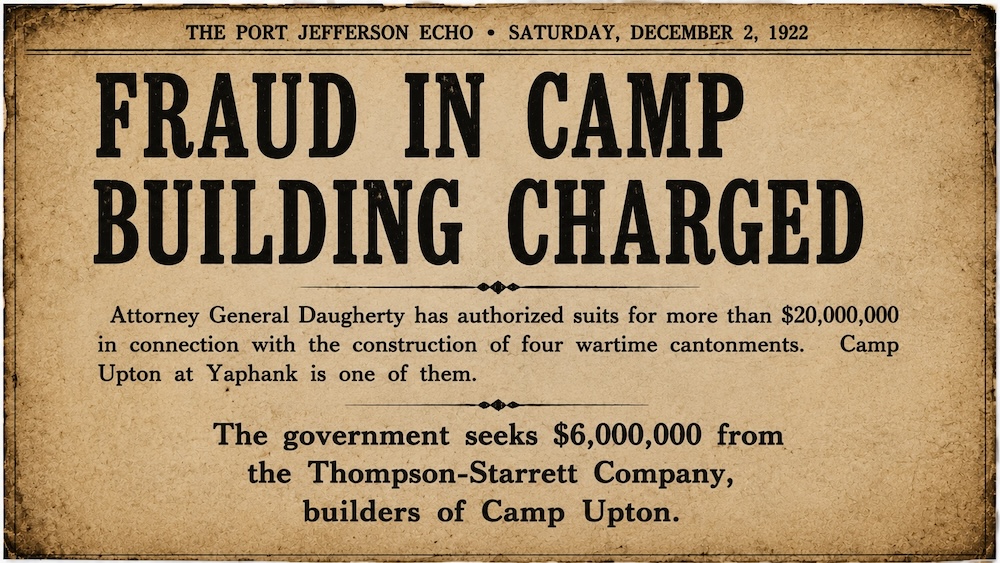
In December 1922, The Port Jefferson Echo reported that the federal government had begun legal action tied to alleged fraud in the construction of Camp Upton during World War I.
The article appeared under the headline “Fraud in Camp Building Charged” in the Dec. 2, 1922 edition of the newspaper.
According to the report, Attorney General Harry M. Daugherty authorized lawsuits seeking more than $20 million connected to the construction of four wartime Army cantonments across the United States. Camp Upton, located in Yaphank, was among them.
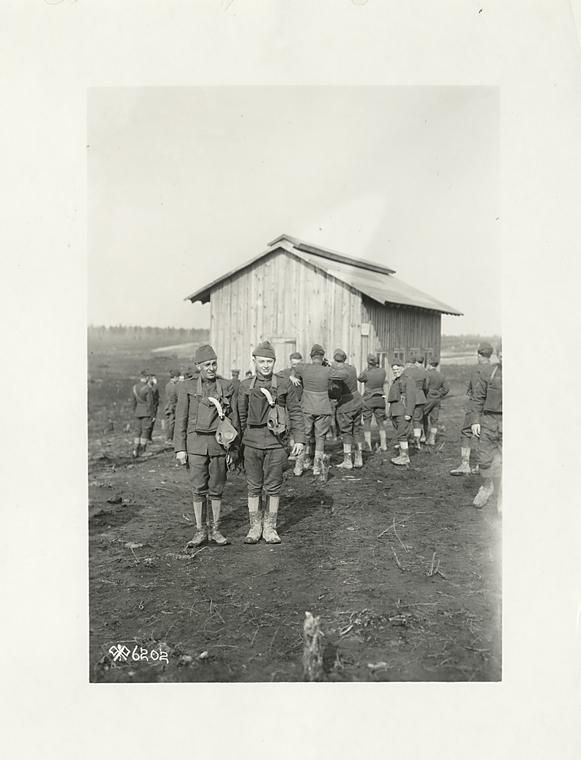
Photo: The Miriam and Ira D. Wallach Division of Art, Prints and Photographs: Photography Collection, The New York Public Library. (1860 – 1920). 77th Division.
The paper stated that the government sought $6 million from the Thompson-Starrett Company, identified as the builders of Camp Upton.
The lawsuits accused contractors of a wide range of wartime fraud practices, including:
- Padding payrolls
- Charging for work that was never completed
- Paying unskilled laborers “exorbitant wages”
- Using unnecessary materials and equipment for profit
- Delaying work and leaving projects unfinished
- Performing work “inefficiently” and not according to specifications
The newspaper described the cases as the first formal step in what federal officials expected would become a much larger prosecution effort involving more than $75 million in alleged wartime contract abuses nationwide.
Camp Upton had been one of the Army’s major World War I training camps. Located in central Suffolk County, it processed thousands of soldiers during the war before eventually becoming part of what is now Brookhaven National Laboratory decades later.
The article in The Port Jefferson Echo reflected how closely Long Island residents followed developments connected to Camp Upton even years after the war had ended.
Read the original article below: