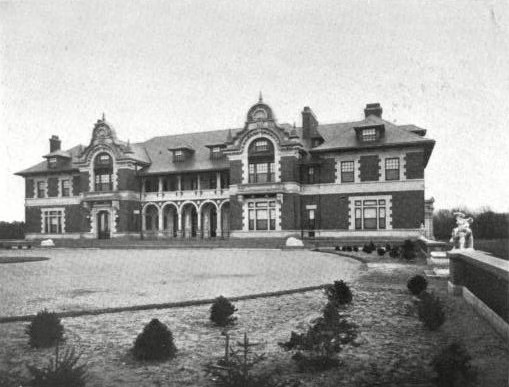
If you’ve ever been near the Connetquot River in Oakdale, you’ve probably passed one of the most overlooked Gilded Age estates on Long Island.
It’s called Idle Hour—and at one point, it wasn’t just a mansion. It was practically its own town.
What stands today is only part of a much bigger, stranger, and more dramatic story.
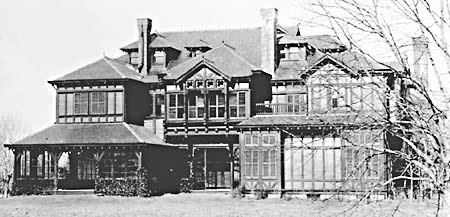
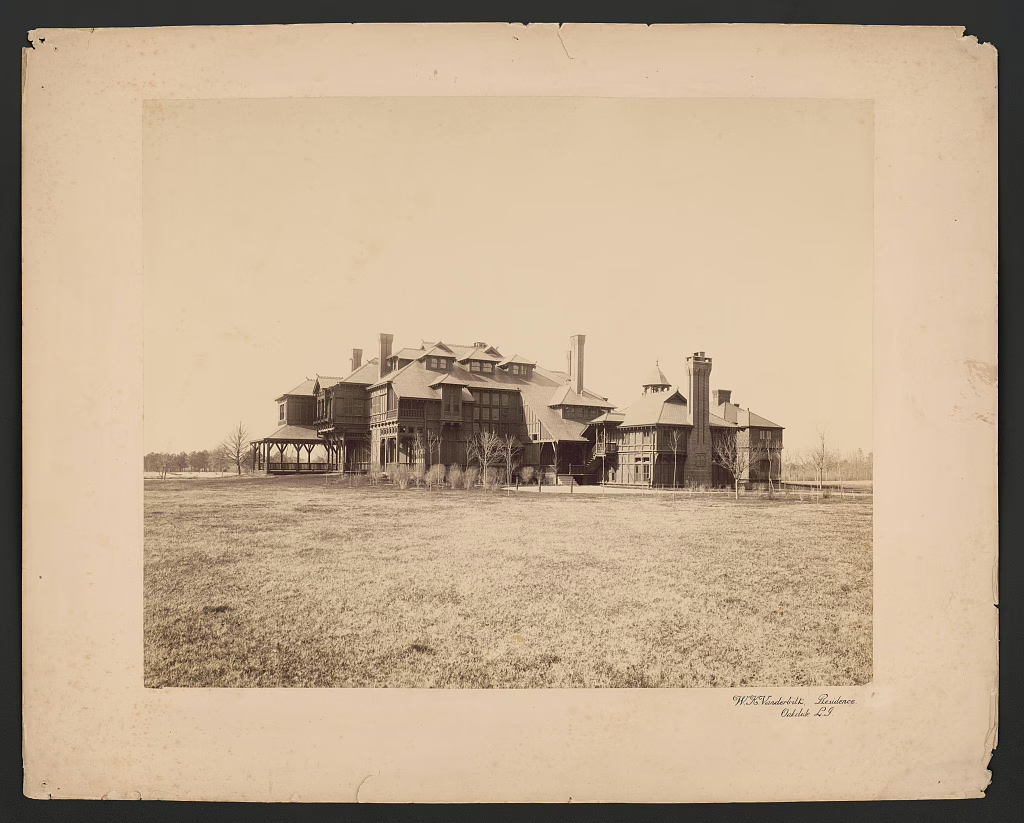
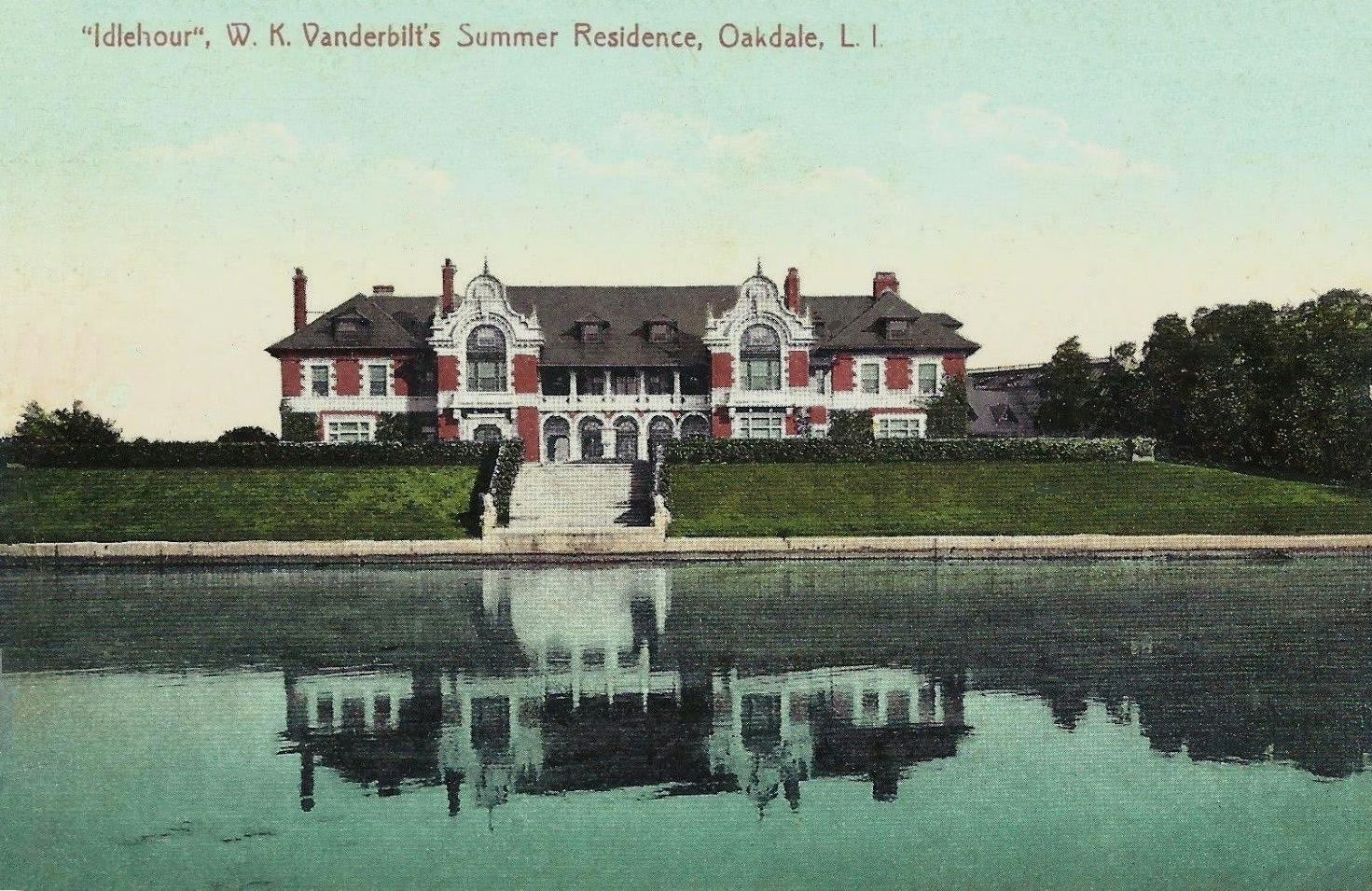
Photo: Idle Hour, the Alva and William K. Vanderbilt estate in Oakdale, Long Island, New York. This first mansion was designed by Richard Morris Hunt under the direction of Alva Vanderbilt. It burned in 1899. It was replaced by a new fireproof mansion in 1901, designed by the firm of Hunt’s sons, that is part of Dowling College today.
A Mansion That Was Never Meant to Be Modest
Idle Hour was built for William Kissam Vanderbilt, one of the most powerful names of the Gilded Age—and he didn’t think small. Here’s what that actually meant:
- The original estate covered about 900 acres along the Connetquot River, stretching across what is now much of Oakdale
- The first version of the home, built starting in 1878 and completed in 1882, had 110 rooms and was made entirely of wood
- It was designed by Richard Morris Hunt, one of the most famous architects in America at the time
- Vanderbilt didn’t stop building, the estate kept expanding for years
This wasn’t just a summer house. It was a statement. And then, it all went up in flames.
The Fire That Interrupted a Honeymoon
In April 1899, Idle Hour burned down in the middle of a moment that sounds almost too dramatic to be real.
- The mansion was destroyed by fire on April 15, 1899
- At the time, Vanderbilt’s son, Willie K. Vanderbilt, was honeymooning there
- He and his new wife narrowly escaped the fire unharmed
- The blaze cut short the honeymoon and wiped out the original home
The event was so significant it made national headlines at the time, with reports describing the chaotic escape and possible causes of the fire . For most estates, that would have been the end but for the Vanderbilts, it was just a reset.
The Rebuild That Made It Even Bigger
Instead of scaling back, the Vanderbilts doubled down.
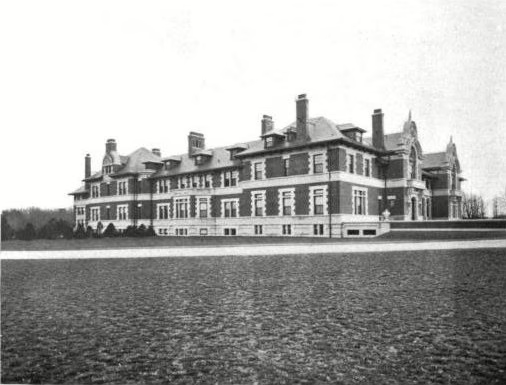
- The mansion was rebuilt in 1901 using red brick and gray stone
- The new design followed an English country-style aesthetic
- It cost about $3 million at the time, an enormous sum
- The redesign was handled by Richard Howland Hunt, the original architect’s son
- Around 1902, the firm Warren & Wetmore added further expansions
And the estate itself? It got even more excessive.
- At its peak, Idle Hour included nearly all of Oakdale
- There were 290 to 300 buildings on the property
- It had its own farm operations with livestock
- And even a paddlewheel steamer to ferry guests along the Connetquot River
This wasn’t just luxury, it was infrastructure.
After the Vanderbilts: Things Got Weird
After William Kissam Vanderbilt died in 1920, Idle Hour entered a completely different chapter.
- The estate was passed to his son Harold Vanderbilt, who eventually sold it in 1921
- A plan to turn it into a country club collapsed just two years later
- In the 1930s, gangster Dutch Schultz reportedly stayed there briefly
And then things took a turn you probably didn’t learn in school:
- Parts of the estate were converted into a bohemian artists’ colony
- This group, called the Royal Fraternity of Master Metaphysicians, included painters, sculptors, musicians, and designers
- Former farm buildings like pig pens and corn cribs were repurposed into studios
From Mansion to College Campus
Idle Hour’s next life is one many Long Islanders remember firsthand.
- In 1963, Adelphi College purchased the property
- In 1968, it became the main campus of Dowling College
- The mansion itself became part of the school’s identity
But history wasn’t done with fires:
- In March 1974, the mansion suffered another major fire
- It required about $3 million in repairs
Dowling remained there until 2016, when the college shut down after financial struggles.
What’s Left Today (And What Happens Next)
Even now, Idle Hour isn’t just sitting quietly.
- The mansion is still one of the largest homes in the United States, around 70,000 square feet
- The property was sold through bankruptcy proceedings and is now owned by Mercury International LLC
- The site has faced issues with vandalism and neglect, sparking concern from locals
- In 2018, the Town of Islip created a Planned Landmark Preservation Overlay District to help protect key structures
- Preservation groups continue pushing for historically sensitive redevelopment
And as of recently:
Parts of the former campus are being marketed for sale again, with multiple possible future uses like housing, education, or hospitality
Why Idle Hour Still Matters
Idle Hour isn’t just another old mansion tucked away in Oakdale. It’s a snapshot of Long Island at its most extreme:
- Gilded Age wealth and ambition
- Fires, reinvention, and reinvestment
- Unexpected chapters involving gangsters and artists
- A full transition into modern Long Island life through higher education
And like a lot of places on Long Island, the real story is much bigger than it looks.
Click here for more stories about Long Island’s historic landmarks.