In June 1699, Captain William Kidd stopped at Gardiners Island, between Long Island’s North and South forks, and left behind gold, silver, jewels and other valuable property. Unlike most stories about buried pirate treasure, this episode is supported by contemporary testimony and official government records. The valuables were eventually recovered by colonial authorities, and a remarkable piece of fabric associated with Kidd’s visit survives in the East Hampton Library’s Long Island Collection more than 300 years later.
The episode took place during the final months of Kidd’s freedom, as the Scottish-born sea captain returned from a controversial voyage to the Indian Ocean. Once commissioned as a privateer to pursue pirates and enemy shipping, Kidd was now facing accusations of piracy himself. He was traveling toward Boston in hopes of meeting Richard Coote, the Earl of Bellomont, who served as royal governor of New York and Massachusetts.
Captain Kidd Arrives at Gardiners Island
Gardiners Island had been in the Gardiner family since 1639, when Lion Gardiner acquired the island during the colonial period. By 1699, it was under the control of John Gardiner, who would become an important witness in the investigation of Captain Kidd.
Kidd anchored his vessel offshore and approached Gardiner about leaving property on the island. The encounter was later described in a sworn statement Gardiner gave in Boston on July 17, 1699, providing one of the most important firsthand accounts of the incident.
Click here for more stories about Long Island’s maritime history, from pirates and shipwrecks to historic lighthouses and the vessels that sailed our waters.
According to Gardiner’s testimony, Kidd asked him to take ashore and safeguard a chest, a box of gold, a bundle of fine quilts and four bales of merchandise. Two members of Kidd’s crew also left two bags of silver, reportedly weighing approximately 30 pounds. Additional valuables included gold and gold dust.
The cargo also included textiles and other imported goods that could be worth considerable sums in the colonial Atlantic economy. Kidd’s own subsequent account described fine muslins, silk decorated with silver and gold, spices and other luxury merchandise among the property he had left on the island.
The sworn testimony also records a less frequently discussed aspect of the encounter. Kidd placed several enslaved children in Gardiner’s custody, including two boys and a girl, and another enslaved boy was subsequently brought ashore. Their presence in the historical record reflects the human trafficking and enslavement associated with Atlantic and Indian Ocean maritime commerce during this period.
The Pirate’s Gifts to the Gardiner Family
Not everything Kidd brought ashore was intended for safekeeping. Gardiner testified that Kidd gave him pieces of damaged muslin and other fabric, including material intended as a present for Gardiner’s wife. Before departing, Kidd also presented Gardiner with a bag of sugar.
Over time, another gift became an important part of the family’s account of Kidd’s visit. According to Gardiner family tradition, Kidd requested a roasted pig during his stay and thanked Mrs. Gardiner with an elaborate piece of fabric decorated with metallic gold and silver thread. The story also describes a pitcher containing dried fruit.
Although these particular details come from family tradition rather than Gardiner’s surviving sworn testimony, an actual fragment of the remarkable fabric has been preserved.
The East Hampton Library’s Long Island Collection holds a piece known as Captain Kidd’s “cloth of gold,” traditionally identified as the material he presented to Mrs. Gardiner in 1699. According to the library, the original fabric was eventually divided among Gardiner family members, with one fragment finding its way into the collection.
The surviving textile contains gold and silver thread and remains one of the most unusual artifacts associated with Kidd’s presence on Long Island. While its connection to the visit rests on the family’s historical account, the physical fabric itself is preserved and documented by the library.
What Happened to Kidd’s Treasure?
Kidd continued toward Boston, where his efforts to resolve the accusations against him proved unsuccessful. Bellomont had him arrested in July 1699 and began securing the valuables associated with his voyage.
In a letter dated July 8, 1699, Bellomont instructed John Gardiner to retrieve the property Kidd had left on the island and bring it to Boston. Gardiner complied, and the valuables became part of the government’s investigation.
The surviving official inventories describe substantial quantities of gold, silver, precious stones and merchandise. Among the recorded items were gold dust, gold bars, silver bars, coins, rings and gemstones.
The property recovered from Gardiners Island was valued at approximately £4,500 in contemporary accounts, a considerable fortune in the late 17th century. The broader seizure of Kidd’s property involved additional goods found elsewhere, making it important to distinguish the island deposit from everything authorities ultimately recovered.
For all the later stories of a lost pirate fortune, the documented valuables deposited with Gardiner were not lost. They were recovered by colonial officials only weeks after Kidd left the island.
The Legend of Cherry Tree Field
The treasure’s documented existence helped establish one of Long Island’s most enduring pirate legends. Over subsequent generations, accounts of Kidd’s visit became associated with a location on Gardiners Island traditionally known as Cherry Tree Field.
According to local tradition, John Gardiner buried the valuables there until authorities ordered their recovery. Other versions of the story described Kidd personally concealing his treasure on the island.
There is an important distinction between these accounts and the surviving testimony from 1699. Gardiner’s sworn statement establishes that Kidd entrusted him with valuable property, but it does not specifically describe Kidd digging a hole and burying the treasure himself.
Later historical accounts, including material preserved by the East Hampton Library, describe the property as having been buried. The underlying deposit and recovery are well documented, while the exact circumstances of the burial are less certain.
Gardiner family lore also eventually included stories of Kidd threatening the family if his valuables disappeared. Those dramatic details are absent from John Gardiner’s contemporary testimony and should be understood as later tradition rather than established fact.
Captain Kidd’s Fate
Kidd never returned to Gardiners Island to reclaim his property. After his arrest in Boston, he was sent to England to stand trial on piracy and murder charges.
His trial resulted in convictions, and he was executed in London on May 23, 1701. His body was subsequently displayed in chains along the Thames, a customary warning against piracy.
Kidd’s trial and execution helped cement his reputation as one of history’s best-known pirates. The complicated circumstances of his privateering commission and the accusations surrounding his voyage have remained subjects of historical study, but there is little uncertainty about his presence on Gardiners Island in 1699.
A Piece of the Story Survives in East Hampton
Gardiners Island remains privately owned and has been associated with the Gardiner family for nearly four centuries. Situated in Gardiners Bay, the island is visible from parts of the East End but is not generally accessible to the public.
The cloth of gold preserved by the East Hampton Library provides a particularly interesting local connection to the story. The library identifies it as a surviving fragment of the textile associated with Kidd’s gift to Mrs. Gardiner, and it remains part of the institution’s extensive historical collection.
The difference between Captain Kidd’s documented activities and the later treasure legends is worth preserving. His visit to Gardiners Island, the valuables he deposited and their recovery by colonial officials are supported by surviving records. The familiar image of the pirate secretly burying a chest of gold comes largely from later retellings.
For Long Islanders, the central historical fact is remarkable enough without embellishment. In the summer of 1699, Captain Kidd really did leave a considerable treasure on Gardiners Island, and the paper trail documenting its recovery survives more than three centuries later.
Sources:
-
Ralph D. Paine, The Book of Buried Treasure (1911), reproducing Gardiner’s testimony and official documents.
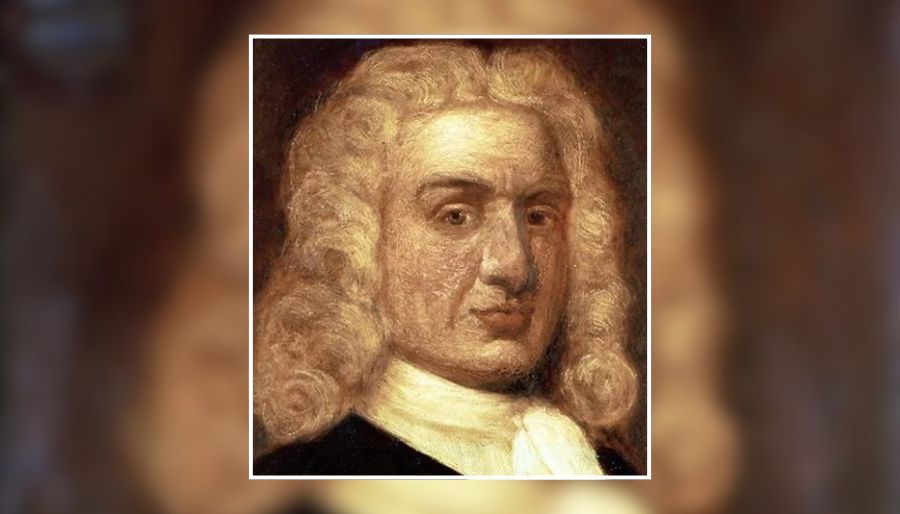
Photo: An 18th-century portrait of Captain William Kidd, the privateer and pirate who left valuable treasure on Gardiners Island in 1699. (Sir James Thornhill, public domain)